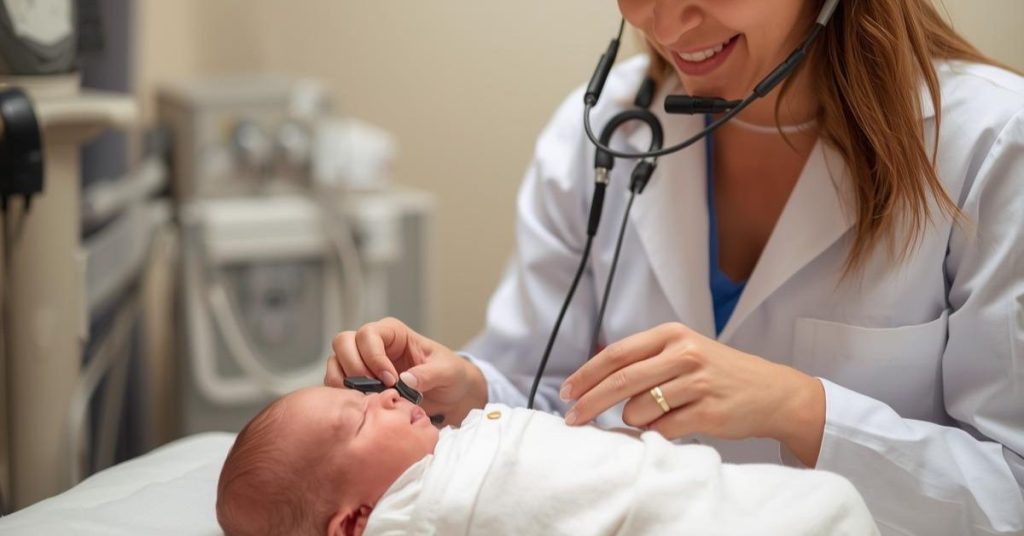
Every parent wants the best start in life for their baby, and hearing plays a critical role in early development. From the first coos and babbles to learning language and social skills, a child’s ability to hear shapes how they understand and interact with the world. Newborn hearing screening is a routine, painless test that helps identify hearing issues as early as possible, ensuring babies get the support they need for healthy growth.
Although it may seem like a small step in the hospital after birth, newborn hearing screening can have a profound impact on a child’s future. Detecting hearing loss early allows parents and healthcare providers to intervene with therapy, hearing aids, or other treatments, helping children reach their full potential. In this article, we will explain what newborn hearing screening is, how it works, why it matters, and what parents should know to support their child’s hearing health.
This guide is designed to provide clear, accurate information for parents, caregivers, and anyone interested in understanding newborn hearing care. By the end, you’ll have a solid understanding of the screening process and why early detection of hearing loss is essential.
Why Newborn Hearing Screening is Important
Hearing is essential for a baby’s language, cognitive, and social development. Even mild hearing loss can affect how a child learns to speak, understand instructions, and interact with others. Studies show that about 1 to 3 of every 1,000 newborns in the United States are born with some degree of hearing loss, making early detection critical. Without timely screening, hearing loss may go unnoticed until speech delays or learning challenges appear, which can significantly impact a child’s development.
Newborn hearing screening is important because it allows healthcare providers to identify potential issues within the first few weeks of life. Early identification means families can access interventions sooner, giving children the best chance for normal language development. The American Academy of Pediatrics recommends that all infants have a hearing screening within the first month of life, with follow-up diagnostics by three months if there are concerns.
Early detection also helps parents feel more prepared and informed. Knowing that a child has a hearing loss allows families to connect with audiologists, speech therapists, and early intervention programs, which can improve long-term outcomes. Additionally, research shows that children who receive early intervention for hearing loss tend to have better speech and language skills, perform better academically, and experience improved social and emotional development compared to those whose hearing loss is detected later.
For parents, understanding the importance of newborn hearing screening emphasizes that this is not just a routine test—it’s a key step in safeguarding their child’s communication abilities and overall growth. By catching potential problems early, healthcare providers and families can work together to ensure children thrive in every stage of life.
How Newborn Hearing Screening Works
Newborn hearing screening is a quick, painless, and non-invasive process designed to detect hearing problems early. There are two main methods used in hospitals and clinics: Otoacoustic Emissions (OAE) and Auditory Brainstem Response (ABR). Both are safe for newborns and do not cause discomfort, making them ideal for screening infants just days old.
Otoacoustic Emissions (OAE) testing measures sound waves produced by the inner ear in response to clicks or tones. During the test, a small soft-tip earpiece is placed in the baby’s ear. The device emits gentle sounds and records the echo that the inner ear produces. If the baby’s ears respond as expected, it indicates normal hearing. If the response is absent or weak, further testing may be recommended. The test usually takes only a few minutes and can be performed while the baby is sleeping or resting calmly.
Auditory Brainstem Response (ABR) testing, on the other hand, measures how the auditory nerve and brain respond to sound. Small sensors are placed on the baby’s head, and soft earphones deliver sounds. The sensors detect electrical activity in the brain in response to the sounds. ABR is particularly useful for babies with risk factors for hearing loss or those who did not pass the OAE screening. Like OAE, ABR is non-invasive and painless, though the baby may need to be asleep during the procedure to get accurate results.
Both screening methods are highly effective at identifying potential hearing loss. Most babies pass the first screening without any issues, but if a baby does not pass, it does not necessarily mean they have permanent hearing loss. Follow-up testing and evaluation by an audiologist are essential to confirm results and determine the next steps.
Parents can take comfort in knowing that these screenings are quick, safe, and provide critical information about their child’s hearing health. Early detection allows interventions to begin as soon as possible, giving children the best chance for normal language development and social growth.
When and Where Newborn Hearing Screening Happens
Newborn hearing screening is typically conducted within the first month of a baby’s life, often before leaving the hospital after birth. Many hospitals and birthing centers have programs in place to ensure that every newborn undergoes screening, making it a routine part of postnatal care. Early testing is crucial because hearing loss detected in the first weeks allows for timely follow-up and intervention, which is key to supporting language and cognitive development.
For babies born in a hospital, screening is usually done while the infant is sleeping or resting quietly. The tests, whether OAE or ABR, take only a few minutes and are designed to be non-invasive and stress-free. In cases where the baby is born at home or in a birthing center without immediate access to screening equipment, pediatricians can schedule the test shortly after birth, typically within the first month. Some regions also have early hearing detection and intervention (EHDI) programs that help families ensure their newborns receive timely screenings.
If a baby does not pass the initial screening, follow-up testing is generally scheduled within a few weeks. These follow-up appointments are often conducted in a specialized audiology clinic, where more detailed evaluations can determine whether the hearing issue is temporary—such as fluid in the ears—or more permanent. Hospitals and pediatric practices provide guidance to parents on scheduling these follow-ups, ensuring no baby “falls through the cracks.”
In addition to hospitals and pediatric offices, some community health centers and early intervention programs also provide newborn hearing screenings. These programs are particularly valuable for families in rural or underserved areas, ensuring equitable access to early hearing detection. Parents should keep records of screening results and follow-up appointments, as this information is critical for ongoing monitoring and any interventions that may be needed.
By conducting hearing screenings early and consistently, healthcare providers give parents the knowledge and resources to act promptly if hearing issues are detected, setting the foundation for a child’s healthy communication and development.
What Happens If a Baby Fails the Screening
Failing a newborn hearing screening can be alarming for parents, but it’s important to remember that an initial “refer” result does not always indicate permanent hearing loss. Several factors, such as fluid in the middle ear, earwax, or even temporary noise in the environment, can affect the test results. The next steps focus on confirming whether a hearing issue exists and, if so, determining the most appropriate intervention.
If a baby does not pass the first screening, a follow-up diagnostic evaluation is usually recommended within a few weeks. This evaluation is conducted by a pediatric audiologist, a specialist trained to assess hearing in infants and young children. The audiologist may use ABR testing, which measures how the auditory nerve and brain respond to sound, providing a more detailed picture of hearing ability. These tests are safe, painless, and can often be performed while the baby is asleep.
Once a diagnosis is confirmed, the audiologist and pediatrician work with parents to develop a care plan. For babies with hearing loss, early intervention may include hearing aids, cochlear implants, or enrollment in speech and language therapy programs. These interventions are most effective when started before six months of age, highlighting the importance of prompt follow-up after a failed screening.
It’s also natural for parents to feel anxious or uncertain after a baby fails the screening. Healthcare providers often provide counseling, resources, and support groups to help families navigate the emotional aspects of a hearing loss diagnosis. Connecting with other parents and professionals can provide reassurance and practical advice on managing the next steps.
Ultimately, the goal of follow-up after a failed screening is early detection and timely support. By acting quickly, families give their children the best chance to develop normal speech, language, and social skills, ensuring they are not at a disadvantage as they grow.
Benefits of Early Detection and Intervention
Early detection of hearing loss in newborns has a profound impact on a child’s development, particularly in speech, language, and cognitive growth. Babies learn to communicate by hearing the sounds around them, and even mild hearing loss can delay language acquisition and social interactions. Detecting hearing issues within the first few months allows families and healthcare providers to implement interventions that support optimal development.
One of the primary benefits of early detection is timely access to treatment. For infants diagnosed with hearing loss, interventions may include hearing aids, cochlear implants, or assistive listening devices, depending on the type and severity of the hearing loss. Early use of these devices helps babies hear and respond to sounds during the critical period for language development, which typically occurs in the first year of life. Studies show that children who receive early intervention often achieve language skills comparable to their peers with normal hearing.
Early intervention also includes speech and language therapy, which is essential for helping children develop communication skills. Therapists work closely with families to create individualized plans that reinforce listening and speaking abilities. Parents are encouraged to engage in activities that promote language, such as talking, reading, and singing to their baby, which further supports brain development and auditory learning.
Another key advantage is improved social and emotional development. Children with early access to hearing support are better able to interact with peers, form relationships, and participate in classroom learning. Delayed detection can lead to frustration, social isolation, and behavioral challenges, making early identification crucial for overall well-being.
Additionally, early detection reduces long-term costs and challenges. Families who begin interventions early often see better academic outcomes and reduced need for intensive educational support later in childhood. This proactive approach not only benefits the child but also provides peace of mind for parents, knowing that they are giving their baby the best possible start in life.
By identifying hearing loss early, parents and healthcare providers can create a supportive environment that promotes language, cognitive, and social development, ensuring children have the tools they need to thrive.
Common Concerns and Misconceptions
Many parents have questions or worries about newborn hearing screening, and understanding the facts can help alleviate unnecessary anxiety. One of the most common concerns is whether the test is safe for babies. Both OAE and ABR screenings are completely non-invasive, painless, and pose no risk to the infant. The devices emit very soft sounds, and the sensors used in ABR testing simply record the baby’s natural brain responses to these sounds—nothing enters the body or causes discomfort.
Another misconception is that a baby who passes the hearing screening will never experience hearing problems. While passing the test is a strong indicator of normal hearing at the time of screening, some children may develop hearing loss later due to infections, genetic conditions, or other factors. This is why pediatricians continue to monitor a child’s hearing and language development during routine checkups.
Some parents worry that a failed screening automatically means permanent hearing loss, but in reality, many babies who do not pass initially have temporary conditions, such as fluid in the ear or minor blockages, that can resolve naturally. Follow-up testing is crucial to determine whether further intervention is needed.
There is also the misconception that newborn hearing screening is optional or unnecessary if the baby seems to respond to sounds. Even babies who appear to react normally to everyday noises can have mild or partial hearing loss that affects language development over time. Routine screening ensures that no issues go undetected and gives parents peace of mind.
Lastly, some parents may wonder if early intervention is effective. Research consistently shows that early identification and treatment significantly improve language, cognitive, and social outcomes. Interventions such as hearing aids, cochlear implants, and speech therapy are most effective when started in the first six months of life, highlighting the critical importance of timely screening.
By addressing these common concerns, parents can feel confident in the screening process and understand its vital role in supporting their baby’s long-term communication and overall development.
Conclusion
Newborn hearing screening is a vital step in ensuring that babies have the best possible start in life. Early detection of hearing loss allows parents and healthcare providers to intervene quickly, providing children with the tools and support they need to develop speech, language, and social skills. The screening process is safe, painless, and routine, yet its impact on a child’s future can be profound.
By understanding how newborn hearing screening works, when it happens, and what to do if a baby does not pass, parents can feel informed and empowered. Early intervention programs, hearing devices, and speech therapy make a significant difference in outcomes, giving children the opportunity to thrive alongside their peers.
For families, the key takeaway is that newborn hearing screening is not just a standard hospital test—it is an essential measure to protect a child’s ability to communicate, learn, and grow. Being proactive about hearing health ensures that babies receive the support they need during the critical early months of life, setting the stage for lifelong success.
FAQ
What is newborn hearing screening and why is it important?
Newborn hearing screening is a quick, non-invasive test conducted shortly after birth to check a baby’s hearing. It is important because early detection of hearing loss allows for timely interventions, such as hearing aids, cochlear implants, or speech therapy, which are crucial for language, cognitive, and social development.
How is newborn hearing screening performed?
There are two primary methods: Otoacoustic Emissions (OAE) and Auditory Brainstem Response (ABR). OAE measures sounds produced by the inner ear in response to clicks or tones, while ABR assesses the brain’s response to sound. Both tests are safe, painless, and usually take only a few minutes while the baby is asleep or resting.
What happens if my baby does not pass the screening?
Failing the initial screening does not necessarily mean permanent hearing loss. A follow-up diagnostic evaluation is conducted by an audiologist to determine the cause and severity. Early intervention programs and treatment options are then tailored to support the child’s development effectively.
When should newborn hearing screening be done?
Screening is typically conducted within the first month of life, often before the baby leaves the hospital. If the baby is born outside a hospital or in a setting without immediate screening, pediatricians schedule the test as soon as possible to ensure early detection.
Are newborn hearing screenings safe for my baby?
Yes, both OAE and ABR screenings are completely safe and non-invasive. The tests involve gentle sounds and harmless sensors, and they do not cause pain or discomfort. They are designed to provide accurate results while keeping the baby calm and comfortable.
This article is for informational purposes only and is not a substitute for professional medical advice, diagnosis, or treatment. If you are concerned about your hearing or ear health, please consult a qualified healthcare provider.