Family events are meant to be joyful, memorable occasions. From summer festivals and live music to fireworks displays, sporting matches, and community celebrations, these experiences often form some of childhood’s happiest memories. However, one important factor is often overlooked amid the excitement: noise. Many popular events expose children to sound levels that can be far louder than their ears can safely handle, even for short periods of time.
Children’s hearing is more delicate than many parents realise. While adults may notice temporary ringing in their ears after a loud concert, children often cannot describe discomfort in the same way. They may simply become irritable, tired, or withdrawn, or they may say nothing at all. Unfortunately, this silence does not mean their hearing is unaffected. Damage from loud noise can happen quickly and painlessly, and once hearing loss occurs, it is usually permanent.
Protecting children’s hearing at events is not about avoiding fun or wrapping children in cotton wool. Instead, it is about understanding safe sound levels and taking simple, practical steps to reduce risk. Just as parents instinctively apply sunscreen on a sunny day or ensure children wear seatbelts in the car, hearing protection should be seen as a normal part of keeping children safe in noisy environments.
Modern life is louder than ever before. Large speakers, amplified music, cheering crowds, and enclosed venues can all push sound levels well beyond what is considered safe for young ears. Even events designed with families in mind may reach volumes that pose a risk, especially when children are close to speakers or surrounded by reflective surfaces such as stadium walls or marquees.
The reassuring news is that noise-induced hearing damage is one of the most preventable forms of hearing loss. With the right knowledge, parents and caregivers can make informed decisions that allow children to enjoy events while protecting their long-term hearing health. Small actions — such as choosing appropriate ear protection, taking listening breaks, or standing further from loudspeakers — can make a significant difference.
This guide is designed to help parents understand why children are more vulnerable to loud sounds, what safe sound levels really mean, and how to spot situations where hearing protection is needed. By building awareness and confidence, families can continue to enjoy concerts, celebrations, and special occasions while safeguarding something priceless: a child’s ability to hear clearly for life.
Why Children’s Hearing Is More Vulnerable Than Adults’
Children are not simply small adults when it comes to hearing. Their ears and auditory systems are still developing, which makes them more sensitive to loud sounds and more susceptible to damage. Understanding why children’s hearing is more vulnerable can help parents appreciate just how important early protection really is.
Inside the ear are thousands of tiny sensory cells known as hair cells. These delicate structures convert sound vibrations into signals that the brain understands as noise, speech, or music. In children, these hair cells are particularly fragile. Exposure to loud sound can bend or damage them, and once they are destroyed, they do not grow back. This means that noise-related hearing damage is permanent, even if it happens during childhood.
Another important factor is ear canal size. Children have smaller ear canals than adults, which can make sounds seem louder by the time they reach the inner ear. As a result, the same noise level that feels “uncomfortably loud” to an adult may be even more intense for a child. This increased sound pressure means children can reach unsafe exposure levels more quickly, even at events that adults may consider tolerable.
Children are also less likely to recognise or communicate discomfort. Adults might instinctively move away from loudspeakers or cover their ears, but younger children often lack the awareness or confidence to do so. They may not understand that a sound is harmful, or they may be too distracted or excited by the event to notice the warning signs. This can lead to longer and more dangerous exposure without anyone realising there is a problem.
Temporary hearing changes can also be misleading. After a noisy event, a child might experience muffled hearing or a faint ringing sound known as tinnitus. These symptoms may fade within hours or days, giving the impression that no harm has been done. However, repeated temporary changes are a sign that the ears are under strain, and over time, they can lead to permanent hearing loss.
Long-term consequences of early hearing damage can extend beyond hearing itself. Hearing loss in children may affect speech development, communication skills, learning, and social confidence. Even mild hearing difficulties can make it harder for children to follow conversations in noisy classrooms or participate fully in group activities.
By recognising that children’s ears are more sensitive and less resilient than adult ears, parents can take proactive steps to protect them. Early awareness and prevention not only reduce the risk of hearing damage now but also help preserve healthy hearing well into adulthood.
Understanding Safe Sound Levels for Children
When it comes to protecting children’s hearing at events, understanding sound levels is key. Noise is measured in decibels (dB), and while the numbers may seem abstract, they provide valuable guidance on what is safe and what could be harmful. For children, safe exposure limits are often lower than many parents expect.
In general, sounds at or below 70 decibels are considered safe, even with long exposure. This is roughly equivalent to normal conversation or background music at home. Once sound levels reach 85 decibels, the risk of hearing damage increases, particularly with prolonged exposure. For children, this threshold can be reached quickly at live events, where music, cheering crowds, and amplified announcements combine to raise overall noise levels.
One of the most important concepts for parents to understand is that both volume and duration matter. The louder the sound, the less time it takes to cause damage. For example, at 85 decibels, safe listening time may be limited to around eight hours. At 100 decibels — a level commonly reached at concerts, festivals, and sporting events — that safe window may shrink to as little as 15 minutes. For young ears, even shorter exposure can be problematic.
Many events fluctuate in volume, which can make risk harder to judge. A family festival might seem manageable at first, only to become dangerously loud during a live performance or fireworks display. Enclosed or semi-enclosed spaces, such as tents, stadiums, or arenas, can amplify sound further by reflecting noise back toward the audience. Children seated close to speakers or sound systems face an even higher risk.
Parents should also be aware that children’s toys and entertainment devices can add to overall sound exposure. When combined with loud events, cumulative noise exposure over the course of a day can push children beyond safe limits, even if no single activity seems excessively loud on its own.
While most parents do not carry decibel meters, there are practical ways to judge whether sound levels may be unsafe. If you need to shout to be heard by someone standing next to you, the noise is likely above safe levels. If a child covers their ears, looks distressed, or moves away from the sound, these are clear signs that protection is needed.
Understanding safe sound levels empowers parents to act early rather than react later. By recognising when noise may be harmful, families can take simple steps — such as using hearing protection or stepping away from the loudest areas — to reduce risk while still enjoying the event.
Events That Commonly Put Children’s Hearing at Risk
Many parents are surprised to learn just how many everyday events can expose children to unsafe sound levels. While concerts and music festivals are often the first to come to mind, there are many other family-friendly occasions where noise can quickly become a problem.
Live music events are among the most common culprits. Outdoor festivals, indoor concerts, and community performances often use powerful amplification systems designed to reach large crowds. Sound levels can easily exceed 100 decibels, particularly near speakers or stages. Children sitting on shoulders or standing close to the front may experience even higher exposure.
Fireworks displays are another major concern. While visually exciting, fireworks produce sudden, explosive sounds that can reach extremely high decibel levels in seconds. Even a short display can be harmful to children’s hearing without proper protection.
Sporting events also present hidden dangers. Stadiums and arenas amplify crowd noise, whistles, horns, and sound effects played over loudspeakers. Children attending football matches, motorsport events, or ice hockey games may be exposed to prolonged noise well above safe limits.
School and community events can be unexpectedly loud. School discos, performances, fairs, and parties often involve music played at volumes intended to energise large groups. Because these events feel familiar and safe, hearing protection is often overlooked.
Even parades and funfairs can pose risks. Sirens, generators, ride machinery, and loud music combine to create fluctuating noise levels. Environmental factors such as enclosed spaces, reflective surfaces, and crowd density can intensify sound further.
Awareness of these risks allows parents to stay alert, choose safer positions, limit exposure time, and have hearing protection ready when needed.
Practical Ways to Protect Children’s Hearing at Events
Protecting children’s hearing at events does not have to be complicated. With preparation and awareness, parents can significantly reduce the risk of hearing damage while still allowing children to enjoy the experience.
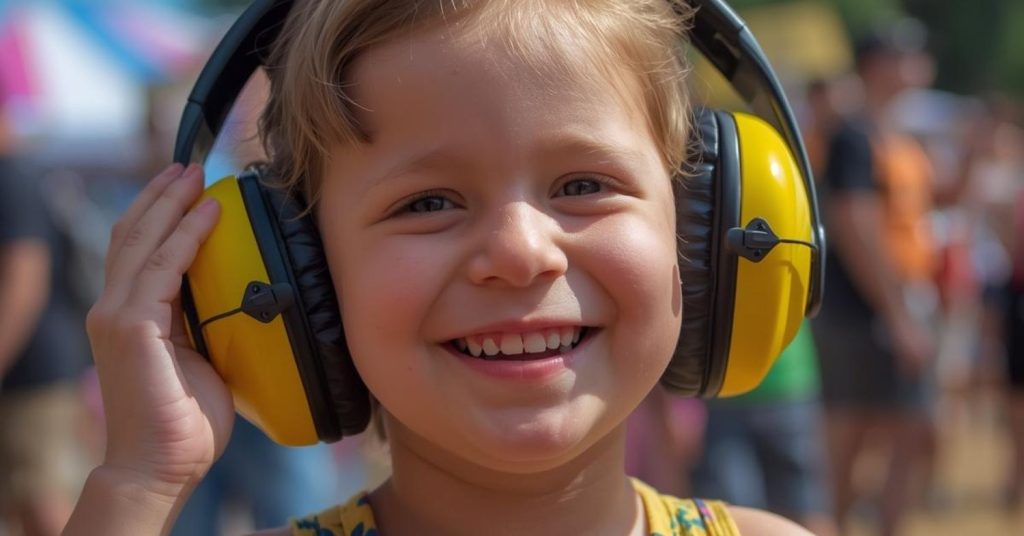
Child-sized ear defenders and earplugs are one of the most effective tools. Ear defenders are often ideal for younger children as they are comfortable, reusable, and easy to fit correctly. Older children may prefer earplugs designed specifically for small ears. The most important factor is consistency — protection must be worn during noisy periods to be effective.
Positioning makes a big difference. Standing further away from speakers and avoiding areas directly in front of sound systems can dramatically reduce noise exposure. For outdoor events, paying attention to wind direction and crowd flow can also help.
Listening breaks are equally important. Stepping into quieter areas allows children’s ears time to recover. Even short breaks can lower overall exposure and reduce fatigue.
Parents should also watch for signs of discomfort, such as ear covering, irritability, anxiety, or a desire to leave. These cues should be taken seriously and acted upon promptly.
Preparing children in advance helps build cooperation. Explaining why ear protection is needed and allowing children to choose colours or styles can make protection feel positive rather than restrictive.
Protecting hearing does not reduce enjoyment. In fact, many children feel calmer and more comfortable with reduced noise, allowing them to enjoy events for longer.
Teaching Children Healthy Hearing Habits Early
Teaching children to care for their hearing early sets the foundation for lifelong hearing health. When children understand why their ears need protection, they are more likely to accept and even seek out hearing safety measures.
Simple, age-appropriate explanations work best. Comparing ear protection to sunglasses or sunscreen helps children understand that it is about protection, not fear.
Encouraging children to listen to their comfort levels empowers them to speak up when something feels too loud. Modelling good behaviour, such as parents using ear protection themselves, reinforces these lessons.
Involving children in preparation, praising positive behaviour, and normalising hearing care all help make safe listening habits second nature.
These early habits influence how children approach noise throughout their lives, from events and social settings to personal device use.
Conclusion
Loud events are a normal and enjoyable part of family life, but they can expose children to unsafe sound levels. By understanding the risks and taking simple preventative steps, parents can protect their children’s hearing without limiting fun or experiences.
Using hearing protection, choosing safer positions, taking listening breaks, and teaching healthy hearing habits all contribute to long-term hearing health. The actions parents take today can preserve a child’s ability to hear, communicate, and enjoy the world for decades to come.
FAQ
Can loud events cause permanent hearing damage in children?
Yes. Even a single exposure to very loud noise can cause permanent hearing damage in children. Repeated exposure increases the risk further.
At what age should children use hearing protection?
At any age. If an event is loud for adults, it is likely loud enough to affect children, including infants and toddlers.
Do ear defenders spoil the experience?
No. Most children adapt quickly, and reduced noise often makes events more enjoyable and less overwhelming.
How can I tell if an event is too loud?
If you need to shout to be heard or if your child covers their ears or appears distressed, sound levels are likely unsafe.
Is limiting time enough without ear protection?
Shorter exposure helps, but combining time limits with proper hearing protection offers the best protection.
This article is for informational purposes only and is not a substitute for professional medical advice, diagnosis, or treatment. If you are concerned about your hearing or ear health, please consult a qualified healthcare provider.