Hearing is something most of us rely on every day, often without giving it much thought. From chatting with family and friends to listening for traffic, alarms, or the television, hearing helps us stay connected, safe, and engaged with the world around us. Yet when hearing starts to change or becomes more difficult, many people realise they don’t actually understand how hearing works in the first place. The good news is that hearing doesn’t have to be complicated to understand.
This guide explains how hearing works simply and clearly, without medical jargon or technical language. Whether you are experiencing hearing changes yourself, caring for someone who is, or just curious about how the ears and brain work together, this article walks through the process step by step. By the end, you’ll have a clear picture of how sound travels from the environment into your ears and is turned into something meaningful, like speech, music, or everyday background sounds.
Many people assume hearing happens only in the ears, but in reality, it’s a team effort between the ears and the brain. The ears collect and process sound, while the brain interprets it and gives it meaning. This is why hearing difficulties can sometimes feel confusing — you might hear sounds but struggle to understand words, especially in noisy places.
Understanding how hearing works also helps people recognise early signs of hearing loss. Hearing changes are common, particularly as we get older, and they often happen gradually. Knowing what’s normal and what’s not can make it easier to seek help early and protect long-term hearing health.
How Sound Is Created and Travels
Sound begins with movement. Whenever something vibrates, it creates sound. This could be vocal cords when someone speaks, a guitar string when it’s plucked, or a door when it slams shut. These vibrations cause the surrounding air to move, creating sound waves.
Sound waves travel through the air in all directions, much like ripples spreading across water. The stronger the vibration, the larger the sound wave. This is why loud sounds feel powerful and quiet sounds feel gentle. These waves move incredibly fast, reaching your ears almost instantly.
Sound has two main characteristics: volume and pitch. Volume refers to how loud or soft a sound is, while pitch describes how high or low it sounds. A deep voice has a low pitch, while birdsong or whistling has a high pitch. Our hearing system is designed to detect a wide range of both.
Everyday environments are filled with many sounds happening at once. In a café, for example, voices, music, clattering dishes, and street noise all mix together. Your hearing system and brain work together to sort through this information so you can focus on what matters most.
Once sound waves reach your ears, the hearing process begins in earnest, starting with the outer ear.
The Outer Ear: Catching Sound
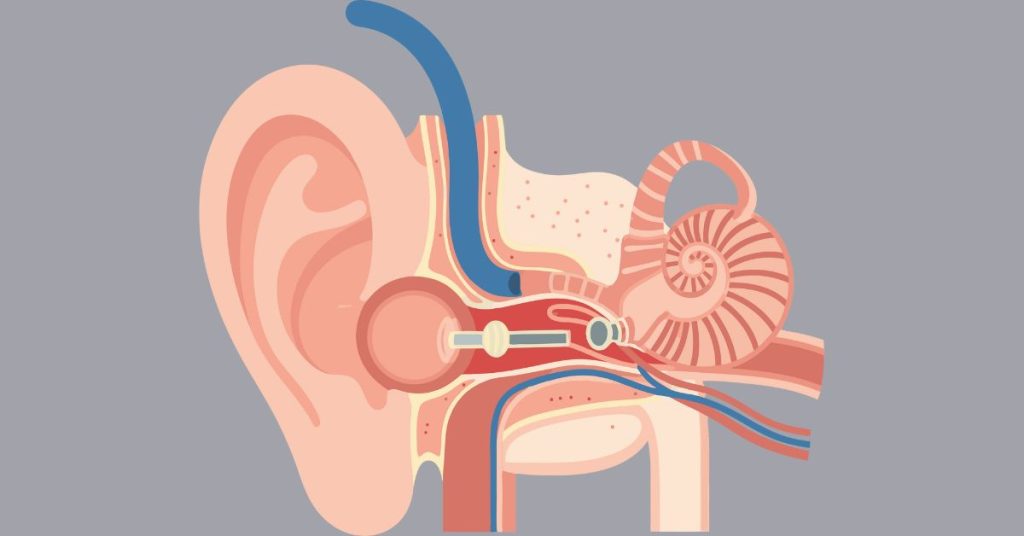
The outer ear is the part you can see on the side of your head, along with the ear canal. Its job is to collect sound waves and guide them inward. The shape of the outer ear helps funnel sound into the ear canal and slightly boosts important sounds, particularly those used in speech.
The outer ear also helps you work out where sounds are coming from. The curves and folds affect sound in subtle ways, allowing the brain to judge direction and distance.
Sound travels down the ear canal to the eardrum, a thin, flexible membrane at the end of the canal. When sound waves hit the eardrum, it vibrates. Louder sounds create bigger vibrations, while quieter sounds create smaller ones. This is the first time sound changes from moving air into physical movement inside the body.
Earwax plays a protective role by trapping dust and debris and keeping the ear canal healthy. However, too much earwax can block sound, making hearing seem muffled. Problems in the outer ear are often temporary and treatable once identified.
From the eardrum, vibrations move into the middle ear.
The Middle Ear: Making Sound Stronger
The middle ear sits just behind the eardrum and contains three tiny bones. These bones work together to pass vibrations from the eardrum into the inner ear while making them stronger.
This amplification is essential because sound needs extra energy to move from air into the fluid-filled inner ear. Without this boost, many everyday sounds would be too soft to hear clearly.
The middle ear also includes the Eustachian tube, which connects to the back of the nose and throat. It helps balance pressure on both sides of the eardrum. This is why your ears may pop when you swallow, yawn, or fly.
If the middle ear isn’t working properly, sound may feel dull or blocked. Fluid, infections, or pressure issues are common causes and often lead to temporary hearing loss that improves with treatment.
Once sound has been strengthened, it moves into the inner ear.
The Inner Ear: Turning Sound into Signals
The inner ear is where sound is transformed into electrical signals. Inside it is the cochlea, a small spiral-shaped structure filled with fluid and lined with thousands of tiny sensory hair cells.
When vibrations enter the cochlea, they cause the fluid to move. This movement bends the hair cells, triggering them to create electrical signals. Different hair cells respond to different pitches, allowing us to hear a wide range of sounds.
These hair cells are extremely delicate and do not regenerate once damaged. Ageing, loud noise, illness, and some medications can harm them over time. Damage here often leads to permanent hearing loss.
People with inner ear hearing loss often say they can hear sounds but struggle to understand speech, especially in noisy places. This happens because the sound signals reaching the brain are incomplete or unclear.
Once electrical signals are created, they travel along the hearing nerve to the brain.
How the Brain Understands Sound
Hearing doesn’t truly happen until the brain interprets sound signals. The brain compares incoming signals with sounds it already knows, allowing you to recognise voices, words, music, and warning sounds.
The brain also filters sound, helping you focus on important noises while ignoring background sound. When hearing changes, this filtering becomes harder, making listening tiring and frustrating.
By comparing sounds received by each ear, the brain can work out where sounds are coming from. This ability is vital for safety and awareness.
If the brain receives unclear sound for long periods, understanding speech can become more difficult. The encouraging news is that the brain is adaptable. With hearing support, it can relearn how to process sound more effectively.
Why Hearing Can Change Over Time
Hearing changes are common and often gradual. Ageing is a major factor, as inner ear hair cells naturally wear down over time. This often affects speech clarity first.
Long-term exposure to loud noise can also damage hearing, even if problems don’t appear straight away. Health conditions such as diabetes and circulation issues may affect hearing too.
Temporary hearing changes can be caused by earwax, colds, infections, or pressure changes. These often improve once treated.
Recognising hearing changes early makes it easier to take positive action and protect long-term hearing health.
Conclusion
Hearing is a complex but beautifully coordinated process involving sound waves, the ears, and the brain. Understanding how hearing works explained simply can help reduce confusion, encourage early action, and support better communication.
Hearing well supports relationships, confidence, safety, and overall quality of life. If you notice changes in your hearing, seeking advice early can make a meaningful difference.
FAQ
How does hearing work in simple terms?
Sound vibrations travel into the ear, are strengthened, converted into signals, and interpreted by the brain as meaningful sound.
Why can I hear but not understand speech clearly?
This often happens when inner ear damage or brain processing changes affect speech clarity, especially in noise.
Can hearing loss happen slowly?
Yes, most hearing loss develops gradually, which is why it’s often missed at first.
Is hearing loss always permanent?
Some causes are temporary, but inner ear damage is usually permanent and managed with support.
When should I get my hearing checked?
If hearing difficulties persist or affect daily life, it’s best to have a hearing test.
This article is for informational purposes only and is not a substitute for professional medical advice, diagnosis, or treatment. If you are concerned about your hearing or ear health, please consult a qualified healthcare provider.