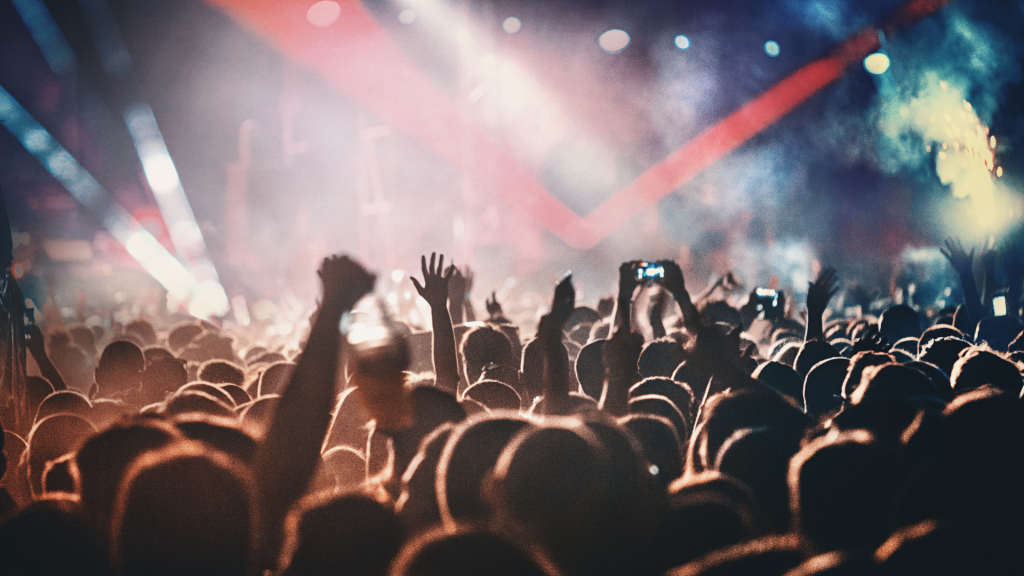
There’s nothing quite like the thrill of live music. Whether you’re a musician immersed in your set or a fan dancing in the front row, the volume, energy, and atmosphere are all part of the magic. But there’s a hidden cost to the experience that too many people realize only after it’s too late: permanent hearing damage.
For musicians, your ears are your most valuable tool. For concert-goers, they’re the gateway to every unforgettable night out. Yet both groups often ignore the early signs of damage—until the ringing doesn’t stop, or the clarity fades from your favorite song.
Hearing protection for musicians and concert-goers isn’t about silencing the music—it’s about preserving your ability to keep enjoying it for life. With the right tools and strategies, you can fully immerse yourself in the sound without sacrificing your hearing health.
In this guide, we’ll explore how loud is too loud, what kinds of hearing protection actually work, and how to stay safe without ruining the vibe. Whether you’re strumming a guitar or screaming lyrics in the crowd, it’s time to tune into your hearing—and make it last as long as your love for music.
Why Hearing Protection Matters for Musicians and Concert-Goers
If you think hearing damage only happens after decades of exposure—think again. Just a single concert or one loud rehearsal can cause lasting harm to your ears. And once it’s gone, it’s usually gone for good.
How Sound Exposure Damages Hearing
Your inner ear is lined with thousands of tiny hair cells inside the cochlea. These cells are responsible for converting sound waves into electrical signals that your brain interprets as music, conversation, or crowd noise. But they’re fragile—very fragile.
When exposed to loud sounds (85 decibels or higher) for extended periods, these hair cells can bend, break, or die. Unlike skin cells, they don’t regenerate. The result? A condition known as sensorineural hearing loss—the most common, permanent type of hearing damage.
For reference:
- Normal conversation = 60 dB
- Busy traffic = 85 dB
- Rock concert = 100–120 dB
- Headphones at full volume = 105 dB+
Even 15 minutes at 100 dB can start to cause damage. Now think about a 3-hour concert or a musician practicing drums or guitar amps day after day.
Hearing Loss, Tinnitus, and What’s Permanent
One of the most immediate effects of sound overexposure is tinnitus—that high-pitched ringing or buzzing in your ears. It may fade after a show, or it might stick around… permanently. Tinnitus affects about 15% of adults worldwide, and musicians are one of the highest-risk groups.
Other symptoms include:
- Muffled or distorted sound
- Difficulty hearing high frequencies
- Struggling to understand speech in noisy settings
- Ear sensitivity (hyperacusis) or pain from normal volumes
The bottom line? Hearing protection isn’t about avoiding sound—it’s about protecting clarity, comfort, and your long-term relationship with music.
How Loud Is Too Loud? Understanding Sound Levels at Shows
If you’ve ever walked out of a concert with your ears ringing or your hearing feeling “off,” you’ve already experienced the effects of excessive noise exposure. But how loud is too loud? And how long does it take before damage sets in?
Decibel Levels at Concerts and Rehearsals
Sound is measured in decibels (dB), and each 10 dB increase represents a doubling of sound intensity. That means 100 dB isn’t just a little louder than 90 dB—it’s twice as intense. Here’s what typical sound levels look like at music events:
| Environment | Average dB Level |
| Quiet room | 30 dB |
| Normal conversation | 60 dB |
| Rehearsal with acoustic band | 85–95 dB |
| Amplified concert (indoors) | 100–110 dB |
| Outdoor festival (front row) | 110–120 dB |
Most concerts peak well above 100 dB, especially for genres like rock, EDM, or hip-hop. Add in crowd noise and bass-heavy sound systems, and you’re dealing with levels that can damage hearing in just minutes.
How Long Is Too Long Without Protection?
Here’s a general guide, according to the NIOSH (National Institute for Occupational Safety and Health):
| Decibel Level | Safe Exposure Time |
| 85 dB | 8 hours |
| 90 dB | 2 hours |
| 100 dB | 15 minutes |
| 110 dB | < 2 minutes |
Once you exceed the safe exposure window, your ears begin to suffer—even if you don’t feel it right away.
And here’s the kicker: most people don’t realize the damage until it’s already done. That’s why prevention is everything when it comes to concerts and rehearsals.
Luckily, there are ways to protect your ears while still enjoying the full power of the performance. We’ll dive into that next—for both musicians and fans.
Best Hearing Protection Options for Musicians
Musicians face a unique challenge: you need to hear your own performance clearly, while still protecting your ears from dangerous volume levels. The good news? You don’t have to choose between sound quality and safety—modern hearing protection is designed with musicians in mind.
In-Ear Monitors (IEMs): Precision and Protection
In-ear monitors (IEMs) are a game-changer for performing musicians. These custom-molded earpieces:
- Deliver a personalized audio mix directly to your ears
- Block out external noise (passive isolation)
- Allow you to lower onstage volume dramatically
- Reduce reliance on floor monitors and stage wedges
By controlling what you hear and how loud it is, IEMs give you greater clarity and control, all while reducing exposure to excessive decibel levels.
Many professional bands and touring artists now require IEMs as part of their tech setup—especially drummers, vocalists, and guitarists.
High-Fidelity Earplugs: Protect Without Muddling the Sound
Not all earplugs are created equal. The squishy foam ones from the drugstore may work in a pinch, but they often muffle and distort sound—a nightmare for musicians who rely on tone and pitch accuracy.
Enter high-fidelity earplugs, designed to:
- Lower the volume evenly across all frequencies
- Preserve the clarity and balance of music
- Reduce sound levels by 12–25 dB, depending on the filter used
- Fit comfortably for long rehearsals and gigs
Top brands like Etymotic, EarPeace, and Westone offer reusable models with interchangeable filters and custom-molded options. Many are nearly invisible on stage.
Custom Earplugs: Made for Your Ears and Your Sound
Custom earplugs offer the best combination of comfort, protection, and sound quality. Made from impressions of your ear canal, they fit perfectly, which:
- Maximizes protection and comfort
- Prevents slipping during performances
- Maintains acoustic transparency
These are ideal for:
- Touring musicians
- Orchestra and jazz performers
- Session musicians and sound engineers
Though more expensive up front, custom protection is a smart investment for long-term hearing health—especially if you perform regularly or professionally.
Top Hearing Protection Tips for Concert-Goers
Whether you’re a festival regular or an occasional club-goer, your ears are taking a beating—and you may not even realize it. But protecting your hearing doesn’t mean sacrificing the experience. With a few smart choices, you can enjoy every drop of bass, every vocal run, and every guitar solo without long-term damage.
What to Bring: Be Prepared, Not Sorry
Before heading to the venue, make hearing protection part of your essentials—right next to your phone and wallet.
Must-haves:
- High-fidelity earplugs (reusable and discreet)
- Spare pair for a friend who forgot theirs
- A case or keychain holder to keep them accessible
- Portable earplug wipes or a soft cloth to clean between uses
Look for earplugs designed for live music that reduce sound evenly without distorting vocals or instruments. You’ll still hear everything—just at a safer volume.
Where to Stand: Sound Positioning Matters
Your location in a venue has a huge effect on how loud the music feels.
- Avoid standing directly in front of speakers—the sound intensity there is dramatically higher.
- Aim for the sides or the back center of the room for a more balanced and slightly quieter mix.
- In outdoor settings, wind can carry sound, so experiment with angles until it feels comfortable.
Don’t be afraid to move if your ears start to feel overwhelmed. If it’s uncomfortably loud, it’s too loud.
Volume-Safe Habits That Save Your Ears
- Take breaks during long sets to let your ears recover—step outside or move to a quieter area.
- Avoid shouting over loud music—this increases vocal strain and adds to overall noise exposure.
- Use smartphone apps (like Decibel X or SoundPrint) to monitor real-time sound levels.
- Give your ears 24–48 hours to rest after a concert to allow recovery from temporary threshold shifts.
The truth is, you don’t need to hear music at max volume to feel it. With proper protection and smart habits, you’ll preserve the quality of your hearing—and keep enjoying shows for years to come.
What Happens If You Don’t Protect Your Ears? Real Stories & Consequences
The phrase “you’ll regret it later” might sound dramatic—but when it comes to your hearing, it’s unfortunately true. Many musicians and music lovers wish they’d taken hearing protection seriously before it was too late. And for some, the impact has been career-altering or even life-changing.
Stories from Musicians with Hearing Loss
Legendary artists from nearly every genre have opened up about the toll loud music has taken on their ears:
- Eric Clapton admitted to suffering from tinnitus and hearing loss after years of playing in loud environments without protection.
- Pete Townshend of The Who famously said his hearing is “virtually gone” from a lifetime of high-volume performing.
- Chris Martin of Coldplay wears molded earplugs religiously now after developing early tinnitus symptoms.
- Classical musicians, especially violinists, flutists, and percussionists, are also at high risk—many developing hearing loss after years in tightly packed orchestras with no protective gear.
Their experiences aren’t isolated. According to studies, 30–50% of professional musicians have some degree of noise-induced hearing loss (NIHL)—and it doesn’t take decades for it to happen.
The Emotional and Professional Impact of Ear Damage
Hearing loss doesn’t just affect your ability to enjoy music—it can affect your ability to create it:
- Tinnitus makes it hard to concentrate during recording or live sets
- Loss of frequency range changes how you perceive tone and pitch
- Muffled or distorted sound makes mixing and mastering incredibly difficult
- The fear of further damage causes anxiety, hesitation, and sometimes even early retirement from performing
And for concert-goers, the emotional impact is just as real. Music may lose its richness. You may avoid loud events altogether. Or you might live with persistent ringing or ear pain—a constant reminder of a night out you didn’t protect yourself during.
The message from those who’ve been there?
“If I had just worn earplugs, I wouldn’t be dealing with this now.”
Hearing Tests, Maintenance, and Recovery Strategies
Think your ears are doing fine? You might be surprised. Hearing loss is often gradual and subtle, making it hard to detect without a professional evaluation. The sooner you check in on your hearing health, the more options you’ll have for preserving and protecting it.
When to Get Your Hearing Checked
If you’re regularly exposed to loud music—whether performing, mixing, or attending shows—it’s a good idea to schedule a baseline hearing test and follow up every 1–2 years.
You should get checked sooner if you:
- Experience ringing or buzzing in your ears after a show
- Struggle to hear conversations in noisy environments
- Notice muffled or distorted sound
- Feel like others are “mumbling” more often than usual
Audiologists can perform a pure tone audiometry test, speech-in-noise tests, and high-frequency evaluations to spot early signs of damage.
Can Hearing Damage Be Reversed or Treated?
Unfortunately, most noise-induced hearing loss is permanent. Damaged inner ear hair cells do not regenerate in humans—yet. But there’s hope in:
- Early intervention: Catching the damage early allows you to slow progression.
- Tinnitus therapies: Masking devices, sound therapy, and CBT can help reduce the impact of ringing.
- Hearing aids or in-ear amplification: These tools can restore clarity and quality for those with measurable loss.
- Ongoing research: Clinical trials for hair cell regeneration and gene therapy are currently underway.
The takeaway? You can’t undo the damage, but you can manage it—and prevent more.
Maintaining Hearing Health Over Time
Like tuning an instrument, hearing care is ongoing. Here’s how to keep your ears in peak condition:
- Use hearing protection during all performances and rehearsals
- Limit daily headphone volume and take listening breaks
- Avoid back-to-back exposure (e.g., gig + afterparty + loud commute)
- Stay hydrated and healthy—circulation supports auditory function
- Support hearing wellness with apps like Mimi Hearing Test, SoundPrint, or NIOSH SLM
Treat your hearing with the same respect you give your gear, your voice, or your creative space—because without it, the music doesn’t sound the same.
How to Talk About Hearing Protection Without Killing the Vibe
Let’s face it—bringing up hearing protection in a music setting can feel like you’re being “that person.” Whether you’re backstage, at a club, or in the middle of a jam session, talking about earplugs and decibels doesn’t always fit the mood.
But here’s the truth: it doesn’t have to be awkward. In fact, it can be empowering.
Breaking the Stigma in Bands, Crews, and Fan Circles
Musicians and fans alike often avoid hearing protection because of:
- Fear of looking uncool
- Worrying it’ll ruin the experience
- Not wanting to be the “buzzkill” in the group
But the tide is turning. More artists and engineers are openly discussing their hearing challenges and encouraging others to protect their ears. And let’s be honest—what’s cooler than taking control of your future and still sounding amazing while you do it?
Here’s how to approach it:
- Start with your own experience: “I started using filtered earplugs and I actually hear better now.”
- Lead by example: Hand out extras. Make it normal.
- Share facts casually: “Did you know concerts hit 110 dB? That’s enough to cause damage in under 5 minutes.”
- Normalize earplugs: “I don’t go to a show without them—like sunglasses for my ears.”
Creating a Hearing-Friendly Music Culture
Whether you’re in a band, on tour, or part of a fan community, creating a safe sound culture can be both practical and inclusive.
- Encourage sound checks that consider ear safety for bandmates, crew, and audience
- Promote earplug use on social media or merch booths
- Ask venues about quiet zones or earplug giveaways
- Support organizations that promote safe listening—like HearSmart or Safe In Sound
The more we talk about hearing protection, the more normal it becomes. No guilt. No shame. Just smart, sustainable love for music.
Because protecting your hearing doesn’t kill the vibe—it keeps the vibe going for life.
Conclusion: Protect Your Hearing. Keep Loving the Music.
Whether you’re shredding on stage or screaming every lyric from the crowd, one thing is certain: you’re in it for the love of music. But that love shouldn’t come at the cost of your hearing. Because once it’s gone, there’s no getting it back—and silence is never the encore you want.
The good news? You don’t have to choose between volume and longevity. With the right tools, habits, and awareness, you can enjoy every beat, drop, and chorus without risking your ears.
From custom earplugs to in-ear monitors, from volume-smart habits to breaking the stigma around hearing protection, you now have what you need to keep the music loud—and your hearing safe.
So bring your earplugs. Talk to your band. Protect your fans. Normalize protection in every pit, set, and encore.
Because music is a lifetime love.
And your ears deserve a standing ovation, too.
Frequently Asked Questions
Are foam earplugs enough for concerts?
Foam earplugs provide basic protection by blocking out a wide range of frequencies, often reducing sound by 20–30 dB. While effective for general noise reduction, they can muffle music, making it sound muddy or dull. For concerts, high-fidelity or musician-grade earplugs are a better choice—they reduce volume evenly without distorting sound.
Do musicians use earplugs on stage?
Yes, many do—especially professionals. Musicians often use custom-molded earplugs or in-ear monitors (IEMs) to protect their ears while still hearing their mix clearly. Artists like Chris Martin, Eric Clapton, and Sting have spoken openly about using hearing protection during performances.
Can tinnitus from concerts go away?
It depends. Temporary tinnitus (ringing after a show) usually fades within hours or days. But repeated exposure can lead to permanent tinnitus, which may persist indefinitely. If you experience ringing that lasts more than 48 hours, you should see an audiologist immediately.
Are custom earplugs worth the cost?
Absolutely—especially if you attend shows regularly or perform live. Custom earplugs are:
- More comfortable for long wear
- More effective due to perfect fit
- Designed to preserve music quality
They can last 3–5 years and cost between $150–300, depending on the brand and filters.
Where can I buy musician-grade ear protection?
Look for brands like Etymotic, Earasers, Westone, Loop, and EarPeace. You can purchase them online, at music stores, or through audiologists who offer custom-molded options. Make sure to choose plugs with flat attenuation filters designed for musicians and concert-goers.
How loud is too loud at a show?
If you have to shout to be heard by someone next to you, it’s likely over 85 dB—the danger zone for prolonged exposure. Most concerts exceed 100 dB, meaning your ears can only tolerate about 15 minutes without protection before risking damage.