In recent years, the hearing aid market has changed dramatically. What was once a highly specialised—and often expensive—piece of medical equipment is now more widely available in a variety of price ranges. With digital technology advancing rapidly, it’s now possible to buy hearing aids for under £500 that promise features once reserved for premium models.
But with so many options online and in high street stores, it’s natural to wonder: are these budget-friendly devices really worth it? For some people, they can be a game-changer—restoring daily conversations, improving safety, and boosting confidence. For others, they might fall short, leaving them frustrated and out of pocket.
The truth is that hearing health is deeply personal. No two ears—or hearing losses—are exactly the same. A device that works well for one person might not meet the needs of another. That’s why it’s important to understand how digital hearing aids work, what you can realistically expect from a sub-£500 model, and whether you might be better served by investing in a more advanced device.
In this complete buyer’s guide for 2025, we’ll explore the pros and cons of affordable digital hearing aids, compare them to higher-end models, and help you decide whether they’re a smart choice for your hearing journey. By the end, you’ll have the knowledge you need to make an informed decision—and, if you’re ready, take the next step by booking a consultation with a hearing specialist.
Start your journey today—book a free hearing assessment with a qualified specialist to discover the best solution for your needs.
Understanding Digital Hearing Aids
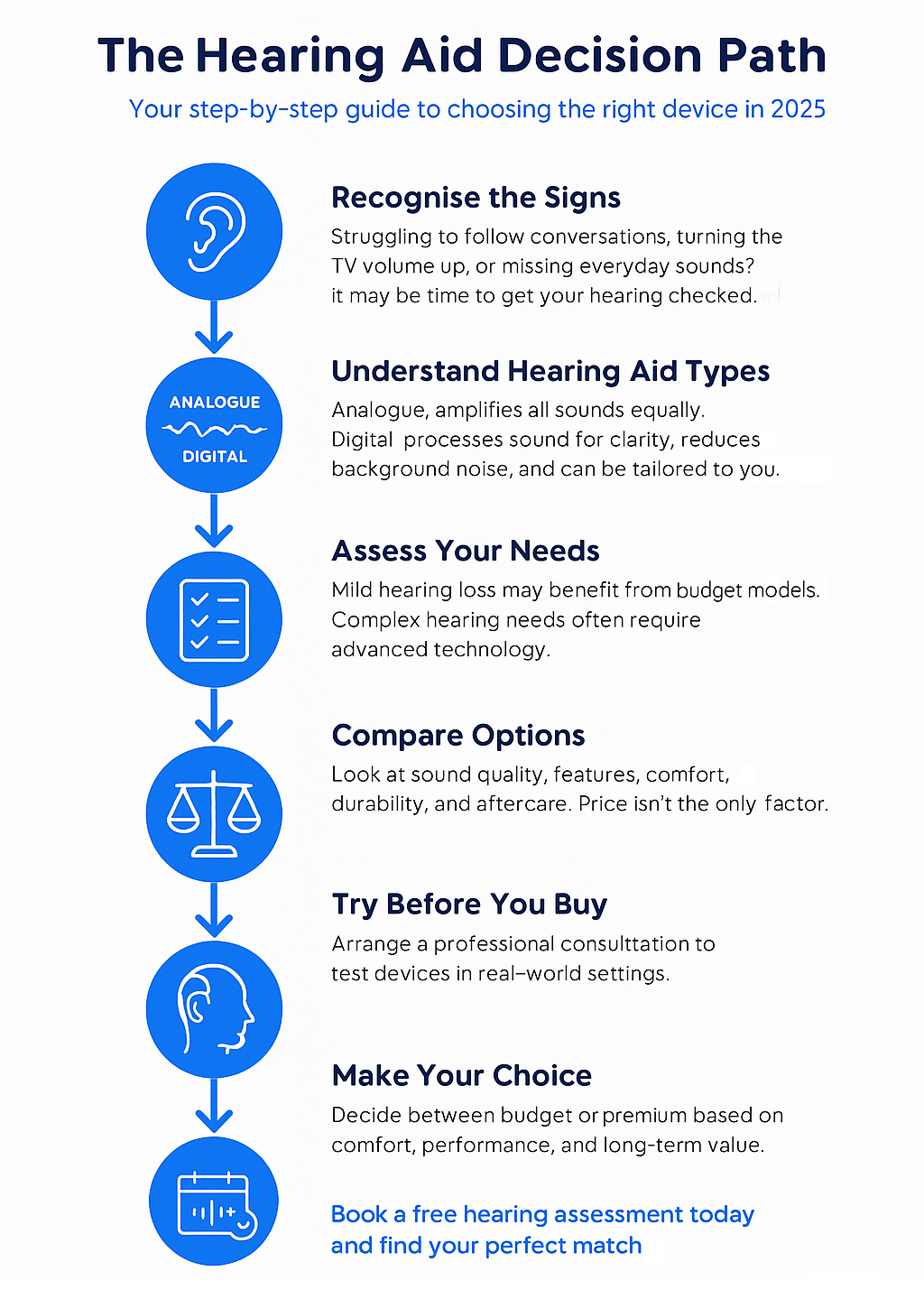
To decide whether a hearing aid under £500 is worth your money, it’s important to first understand what “digital” really means in this context.
Hearing aids come in two main types: analogue and digital. Analogue devices simply amplify all sounds, much like turning up the volume on a radio. Digital hearing aids, on the other hand, process incoming sounds using computer chips. This allows them to distinguish between speech and background noise, reduce unwanted sounds, and fine-tune audio to better match the wearer’s hearing profile.
How Digital Hearing Aids Work
Digital hearing aids convert sound waves into digital signals. These signals are then analysed and adjusted according to pre-set programs—often tailored by a hearing care professional. For example, if you’re in a busy café, the device can focus on voices in front of you while reducing the clatter of dishes or traffic noise outside.
Features You’ll Find in Modern Devices
Even budget digital hearing aids in 2025 can include:
Noise reduction to improve clarity in busy environments
Multiple listening programs for different situations (e.g., conversations, music, outdoors)
Feedback cancellation to reduce the whistling sound older aids often produced
Wireless or Bluetooth connectivity in some models, allowing streaming from phones or TVs
However, while premium devices often offer more advanced algorithms, better microphone arrays, and faster processing speeds, budget models may have simpler versions of these features—or omit them entirely.
Why Price Doesn’t Always Equal Performance
It’s a common misconception that a high price automatically means the “best” hearing aid. For those with mild hearing loss, a well-chosen device under £500 can deliver noticeable improvement in daily life. That said, people with more complex hearing needs may find the limitations of lower-cost options frustrating.
Understanding these fundamentals sets the stage for weighing the real-world benefits and potential drawbacks of budget hearing aids—which we’ll explore next.
Not sure what level of technology you need? Book a consultation and get tailored advice from a hearing expert.
The Benefits of Hearing Aids Under £500
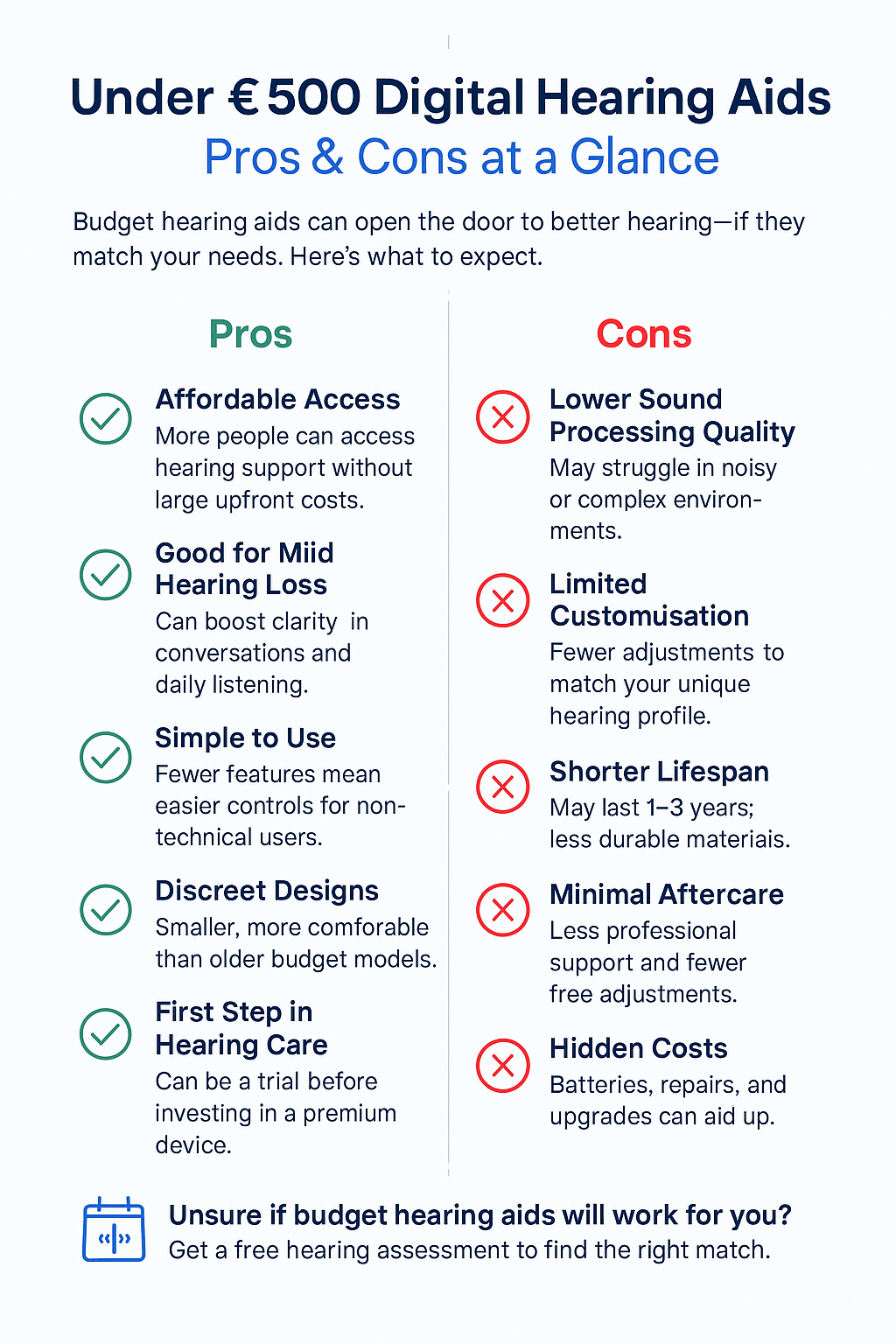
For many people, the appeal of a digital hearing aid under £500 comes down to one word: accessibility. Whether you’re on a fixed income, just beginning to notice signs of hearing loss, or hesitant to commit to a costly medical device, budget-friendly options can offer a welcome entry point into better hearing.
Affordable Access to Hearing Support
Premium hearing aids can cost anywhere from £1,000 to over £3,000 per ear—a figure that can be overwhelming, especially without insurance or NHS eligibility. Devices under £500 make amplification technology more attainable for a wider audience, allowing more people to experience improved hearing without a large upfront investment.
Suitable for Mild Hearing Loss
If your hearing loss is mild, you may not need advanced processing power or extensive customisation. Many affordable devices are capable of boosting clarity in conversations, making it easier to hear the television, or improving awareness in everyday environments like shops and cafés.
Simplicity and Ease of Use
Lower-cost models often have fewer features, which can be a plus for those who prefer straightforward controls. Instead of multiple complex programs, you might have a simple volume dial or one-button settings. This can make them particularly appealing for older adults who don’t want to navigate smartphone apps or complicated menus.
Discreet and Comfortable Designs
Advances in manufacturing mean that even budget hearing aids are smaller and more discreet than their counterparts from a decade ago. Many come in behind-the-ear (BTE) or completely-in-canal (CIC) styles, offering comfort and a less noticeable appearance.
A First Step Toward Hearing Health
For someone new to hearing aids, a lower-cost option can be a “trial run” before investing in a more advanced device. This can help you adjust to the sensation of amplified sound and better understand your specific listening needs.
While there are clear advantages, especially for certain users, there’s also another side to the story—budget hearing aids aren’t without their drawbacks. In the next section, we’ll look at the limitations and risks so you can make a balanced decision.
If you’re curious about trying a budget-friendly device, arrange a hearing check with a specialist to see if you’re a good candidate.
The Limitations and Risks of Cheaper Hearing Aids
While digital hearing aids under £500 can be appealing, it’s important to understand where they may fall short—particularly if your hearing needs are more complex. For some users, these limitations could mean the difference between mild improvement and ongoing frustration.
Reduced Sound Processing Quality
Budget devices often use simpler sound-processing algorithms. This means they may struggle to differentiate between speech and background noise in challenging environments, such as busy restaurants or family gatherings. You may notice that voices aren’t as crisp or that certain sounds feel “muddy” compared to what premium aids can deliver.
Limited Customisation
A professional hearing aid fitting involves programming the device to match your specific hearing profile. Many lower-cost devices, especially those bought online, come with fixed settings or only basic adjustments. Without personalised calibration, you may not get the full benefit of amplification—or worse, you could find certain sounds uncomfortably loud.
Shorter Lifespan and Durability Issues
Materials and build quality can vary significantly. Some cheaper models may wear out more quickly, especially if exposed to moisture, earwax, or daily wear-and-tear. While premium hearing aids often come with warranties of two to three years, budget versions might offer shorter coverage—or none at all.
Lack of Professional Support
Purchasing an aid online or from a non-specialist retailer may save money initially, but you could miss out on vital aftercare. Professional services like regular adjustments, deep cleaning, and hearing re-tests are key to keeping your device—and your hearing—at its best. Without them, you may find your hearing experience deteriorates over time.
Hidden Costs
While the upfront price might be under £500, there can be additional expenses. Batteries, replacement domes, repairs, or the eventual need to upgrade to a higher-quality model can add up. In some cases, the “cheaper” option can cost more over the long term.
Understanding these risks helps you see why a one-size-fits-all approach to hearing aids doesn’t work. In the next section, we’ll compare budget and premium models side-by-side so you can determine which is truly the better value for your needs.
Avoid disappointment—speak with a hearing professional before committing to any device, budget or premium.
Comparing Budget vs. Premium Hearing Aids in 2025
When weighing up whether a hearing aid under £500 is “worth it,” the clearest picture comes from a direct comparison with premium models. Both categories serve the same purpose—helping you hear better—but the experience can differ significantly depending on your needs, lifestyle, and expectations.
Sound Quality and Processing
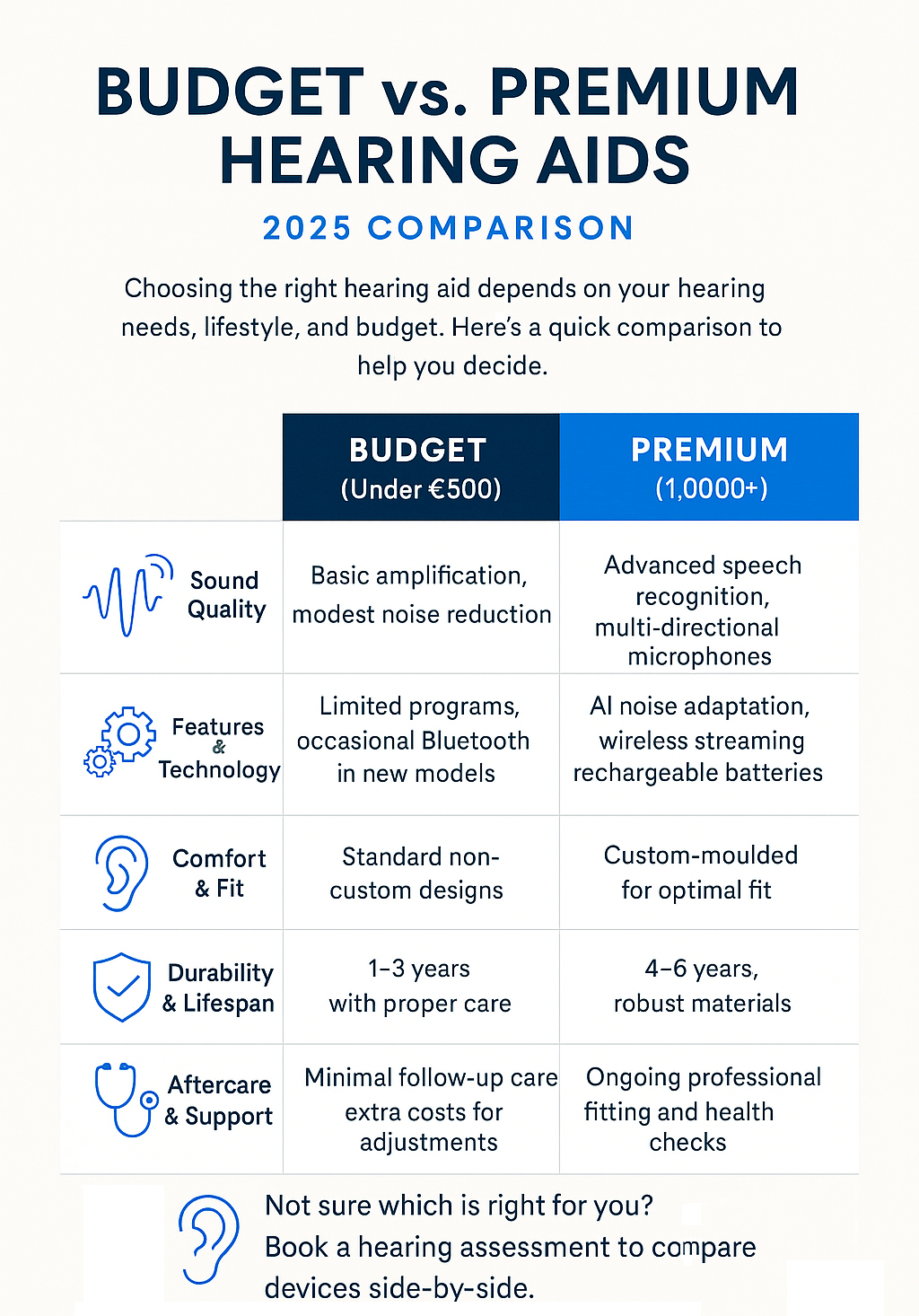
Budget hearing aids: Typically provide basic amplification with modest noise reduction. They perform well in quiet settings but can struggle in noisy or complex listening environments.
Premium hearing aids: Offer more advanced speech recognition, multi-directional microphones, and faster sound processing, resulting in clearer speech even in background noise.
Features and Technology
Budget models: May have limited program settings and fewer customisation options. Bluetooth streaming is rare in this price range, though some newer models in 2025 are starting to include it.
Premium models: Often include wireless streaming, AI-driven background noise adaptation, rechargeable batteries, and smartphone app controls for on-the-go adjustments.
Comfort and Fit
Budget models: Tend to come in standard, non-custom designs, which can be comfortable but may not provide the perfect fit for everyone.
Premium models: Usually custom-moulded to your ear, ensuring a secure and discreet fit, and optimised for long-term wear.
Durability and Lifespan
Budget models: May last 1–3 years with proper care. Cheaper materials can mean more wear over time.
Premium models: Often last 4–6 years, with more robust build quality and better resistance to moisture, dust, and earwax.
Aftercare and Support
Budget models: Often sold with minimal follow-up care, meaning adjustments and servicing may incur extra costs.
Premium models: Typically include professional fitting, ongoing adjustments, and regular hearing health checks—ensuring your device remains optimised over time.
Bottom line: If you have mild hearing loss and mainly use your hearing aids in quieter settings, a well-chosen budget model may meet your needs at a fraction of the cost. However, if you have moderate-to-severe hearing loss, lead an active lifestyle, or want the latest technology, investing in a premium model may deliver greater long-term value.
Book an appointment with a hearing specialist to compare budget and premium devices side-by-side before making your decision.
Conclusion
Digital hearing aids under £500 have opened the door for many people to access hearing support without the financial strain of premium models. For some, especially those with mild hearing loss or a quieter lifestyle, these budget-friendly devices can offer a meaningful improvement in day-to-day conversations, TV listening, and general awareness.
However, they’re not a one-size-fits-all solution. Lower-cost models often lack the advanced sound processing, custom fitting, and durability of premium aids. They may perform admirably in calm environments but fall short in noisy, complex settings—leaving some users dissatisfied. Over time, the lack of aftercare and shorter lifespan could make them less cost-effective than initially expected.
The decision ultimately comes down to your personal hearing needs, lifestyle, and priorities. If you’re unsure, the safest path is to get a professional hearing assessment. A qualified hearing specialist can recommend devices within your budget that also match your hearing profile, ensuring you get the best possible results.
Your hearing health is worth investing in—whether that means starting with a budget device as a stepping stone or choosing a more advanced model from the start. The important thing is to take action, because untreated hearing loss can impact not only communication, but also cognitive health, emotional wellbeing, and quality of life.
Book a consultation with a specialist today to explore your options and take the first step toward clearer, more confident hearing.
FAQ
What is the difference between digital and analogue hearing aids?
Analogue hearing aids amplify all sounds equally, much like turning up the volume on a speaker. Digital hearing aids, on the other hand, process sounds through a computer chip, allowing them to enhance speech while reducing background noise. This technology can also be programmed to suit your specific hearing profile.
Can a hearing aid under £500 work for severe hearing loss?
In most cases, no. Budget models are generally best suited for mild to moderate hearing loss. Severe hearing loss often requires more advanced devices with higher amplification power, better sound processing, and a custom fit to ensure optimal results.
Do cheaper hearing aids have Bluetooth connectivity?
Some newer budget models released in 2025 are starting to include Bluetooth features, but this is still more common in mid-range and premium devices. If wireless streaming is important to you, it’s worth checking the product specifications carefully before purchasing.
How long will a hearing aid under £500 last?
With proper care, a budget hearing aid might last between 1 and 3 years. Factors such as build quality, exposure to moisture, and maintenance frequency can all affect its lifespan. Premium devices often last longer due to higher-quality materials and better moisture resistance.
Should I buy a hearing aid online or from a specialist?
Buying online can save money upfront, but it often means missing out on professional fitting, adjustments, and aftercare. A specialist can ensure your device is programmed correctly for your hearing needs and provide ongoing support to keep it performing at its best.