
Hearing tests come in many forms, and not all of them involve pressing a button or raising a hand when you hear a sound. For some people, especially infants, young children, or adults with complex hearing concerns, traditional hearing tests are not always suitable. This is where the Auditory Brainstem Response (ABR) test plays an important role. If you or someone you care for has been referred for an ABR test, it is completely normal to feel uncertain about what it involves and why it is needed.
The Auditory Brainstem Response test is a specialised assessment that looks beyond the ear itself. Instead of relying on a person’s response to sound, it measures how well sound signals travel along the hearing nerve and through the brainstem. Because of this, it is considered an objective test, meaning the results are based on recorded responses from the nervous system rather than on personal feedback. This makes the ABR test particularly valuable for diagnosing hearing issues when standard testing methods are not possible or do not provide clear answers.
In this article, we explain the Auditory Brainstem Response test in clear, easy-to-understand terms. You will learn what the test is, why it is done, who may need it, and what the results can reveal about hearing and nerve function. Whether you are an older adult noticing changes in your hearing, a caregiver seeking answers, or a parent whose child has been referred for testing, this guide is designed to help you feel informed and reassured.
What Is an Auditory Brainstem Response (ABR) Test?
An Auditory Brainstem Response (ABR) test is a diagnostic hearing assessment that measures how sound travels from the ear to the brain. Rather than asking a person to respond when they hear a sound, the ABR test records the electrical activity generated by the auditory nerve and brainstem when sound is presented. This makes it an objective test, meaning it does not rely on attention, understanding, or verbal feedback from the person being tested.
When a sound enters the ear, it passes through the ear canal and middle ear before reaching the inner ear, where it is converted into electrical signals. These signals then travel along the auditory nerve to the brainstem and onward to the brain. During an ABR test, small sensors called electrodes are placed on the scalp and behind the ears to detect this electrical activity. The electrodes are connected to a computer that records and analyses the responses to sound, usually in the form of brief clicking noises or tones delivered through earphones.
The results of an ABR test appear as a series of waveforms on a screen. Each waveform represents a specific point along the hearing pathway, from the auditory nerve to different levels of the brainstem. Audiologists and hearing specialists are trained to analyse these waveforms, paying close attention to their timing and shape. Delays or abnormalities in these responses can indicate where a hearing or neurological issue may be occurring.
Because the ABR test does not require active participation, it is especially useful for people who cannot complete conventional hearing tests. This includes newborn babies, young children, adults with developmental or cognitive challenges, and individuals who may be very unwell or unable to communicate reliably. In adults, the ABR test is also used to investigate more complex hearing problems, such as suspected nerve damage or conditions affecting the brainstem.
Why Is the ABR Test Done?
The Auditory Brainstem Response (ABR) test is done to gain detailed information about how sound signals travel from the ear to the brain. While standard hearing tests are excellent for measuring hearing sensitivity, they do not always explain why someone is having difficulty hearing. The ABR test helps fill this gap by assessing the function of the auditory nerve and brainstem.
One of the most common reasons an ABR test is recommended is to help diagnose hearing loss in people who cannot reliably take part in traditional hearing tests. This includes newborn babies, young children, and adults with learning difficulties or cognitive impairment. Because the ABR test does not depend on behavioural responses, it provides accurate and objective information about hearing ability, even when a person is asleep or resting quietly.
In adults, the ABR test is often used when hearing loss appears unusual or cannot be fully explained by routine testing. For example, if someone reports significant hearing difficulties but standard test results are unclear or inconsistent, an ABR test can help identify whether the issue lies in the auditory nerve rather than the ear itself. It may also be used when there is a difference in hearing between the two ears that needs further investigation.
The ABR test is also an important tool for detecting neurological conditions that affect the hearing pathway. It can help identify problems such as auditory neuropathy, where sound enters the inner ear normally but signals are not transmitted effectively to the brain. In some cases, the test is used as part of the assessment for conditions affecting the brainstem, including tumours on the auditory nerve, such as acoustic neuromas.
What Happens During an ABR Test?
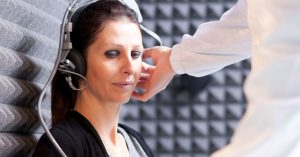
Knowing what to expect during an Auditory Brainstem Response (ABR) test can help reduce anxiety and make the experience more comfortable. The test itself is painless, non-invasive, and does not involve any needles or electrical shocks.
Before the test begins, the audiologist or hearing specialist will clean small areas of the skin on the forehead, scalp, and behind the ears. Small electrodes are then gently attached to the skin using a sticky gel or pad. These electrodes do not deliver electricity; they only detect the tiny electrical signals produced by the hearing nerve and brainstem in response to sound.
Once the electrodes are in place, earphones or soft insert earbuds are placed in the ears. A series of sounds, usually clicking noises or tone bursts, are played through the earphones. The person being tested is asked to remain still and relaxed. Infants and young children are often tested while asleep, and in some cases mild sedation may be used if necessary.
The ABR test usually takes between 30 minutes and two hours. After the test, the electrodes are removed and normal activities can be resumed immediately. The recorded responses are analysed by a specialist and discussed at a follow-up appointment.
Who Needs an ABR Test?
An Auditory Brainstem Response (ABR) test is recommended for people who cannot be accurately assessed using standard hearing tests or whose hearing problems are complex. Newborn babies are a key group, as early identification of hearing loss is critical for speech and language development.
Young children may also need an ABR test if behavioural testing is unreliable due to developmental delays or difficulty following instructions. In adults, ABR testing is often used when hearing loss is unexplained, uneven between the ears, or accompanied by symptoms such as tinnitus, dizziness, or balance issues.
The test is particularly important when damage to the auditory nerve or brainstem is suspected. This includes people with auditory neuropathy, head injuries, or neurological conditions. The ABR test helps ensure accurate diagnosis and appropriate care.
Understanding ABR Test Results
ABR results are presented as waveforms that reflect electrical activity along the auditory pathway. Specialists analyse the timing and shape of these waves to determine whether sound signals are being transmitted normally.
Normal results suggest healthy nerve and brainstem function, while abnormal results may indicate hearing loss, nerve damage, or neurological involvement. Differences between ears can also be significant and may require further investigation.
ABR results are always interpreted alongside other tests and clinical information. A healthcare professional will explain what the findings mean and advise on next steps if needed.
Benefits and Limitations of the ABR Test
The ABR test offers objective, reliable information and is safe, painless, and suitable for all ages. It is particularly valuable for assessing the auditory nerve and brainstem and identifying conditions not detected by routine hearing tests.
However, it does not measure hearing perception or speech understanding and cannot fully replace behavioural tests. It can also be time-consuming and may lead to further testing. Used together with other assessments, it provides an important part of a complete hearing evaluation.
Conclusion
The Auditory Brainstem Response (ABR) test is a trusted and essential tool for understanding how sound travels from the ear to the brain. It plays a vital role in diagnosing hearing and neurological conditions across all age groups.
If you have been referred for an ABR test, knowing what it involves can help you feel more confident and informed. Always discuss your results and concerns with a qualified hearing professional to ensure the best possible care.
FAQ
What does an ABR test diagnose?
It helps diagnose hearing loss and assess the auditory nerve and brainstem, including conditions such as auditory neuropathy.
Is an ABR test painful?
No. It is painless and non-invasive.
How long does an ABR test take?
Usually between 30 minutes and two hours.
Do adults need to sleep during the test?
No, but staying still and relaxed is important.
What happens after the test?
Results are reviewed by a specialist and discussed at a follow-up appointment.
This article is for informational purposes only and is not a substitute for professional medical advice, diagnosis, or treatment. If you are concerned about your hearing or ear health, please consult a qualified healthcare provider.