Hearing loss is a common challenge for adults over 50, affecting communication, social interactions, and overall quality of life. For many, the journey to better hearing involves deciding between two main solutions: hearing aids and cochlear implants. While both devices aim to improve hearing, they work in very different ways and are suited to different levels of hearing loss. Understanding these differences, along with the benefits, costs, and lifestyle considerations of each option, is crucial for making an informed decision.
Hearing aids are often the first line of treatment, designed to amplify sound and help people hear more clearly in everyday situations. Cochlear implants, on the other hand, are more advanced medical devices that bypass damaged parts of the inner ear to directly stimulate the auditory nerve, providing the potential for significantly improved hearing in cases of severe or profound hearing loss.
In this article, we will explore how hearing aids and cochlear implants work, their advantages and limitations, and the practical considerations—including cost and lifestyle—needed to make the best choice. Whether you are experiencing hearing challenges yourself or are a caregiver supporting someone with hearing loss, this guide will provide the essential information to help navigate these options confidently.
Understanding Hearing Loss and Its Impact
Hearing loss is more than just an inconvenience—it can significantly affect daily life, relationships, and even mental health. For adults over 50, age-related hearing loss, also known as presbycusis, is the most common cause. This gradual loss typically affects the ability to hear high-frequency sounds, making conversations, especially in noisy environments, more difficult to follow. Other causes include prolonged exposure to loud noise, ear infections, certain medications, and genetic factors.
The effects of untreated hearing loss go beyond missed words or repeated questions. Social withdrawal is common, as individuals may avoid gatherings where communication is challenging. This isolation can contribute to feelings of loneliness, anxiety, and even depression. Cognitive decline has also been linked to untreated hearing loss, as the brain has to work harder to process incomplete auditory information, potentially impacting memory and focus over time.
Recognizing the early signs of hearing loss is crucial. Common indicators include frequently asking people to repeat themselves, turning up the volume on devices, or struggling to follow conversations in groups. Regular hearing assessments with an audiologist can detect changes early, allowing timely intervention with hearing aids or cochlear implants.
Understanding the impact of hearing loss provides context for why solutions like hearing aids and cochlear implants exist. Each option offers unique ways to restore auditory function and improve quality of life. Choosing the right solution depends on the severity of hearing loss, personal lifestyle, and individual preferences. In the following sections, we’ll explore how hearing aids work, their benefits and limitations, and how they compare to cochlear implants.
How Hearing Aids Work: Benefits and Limitations
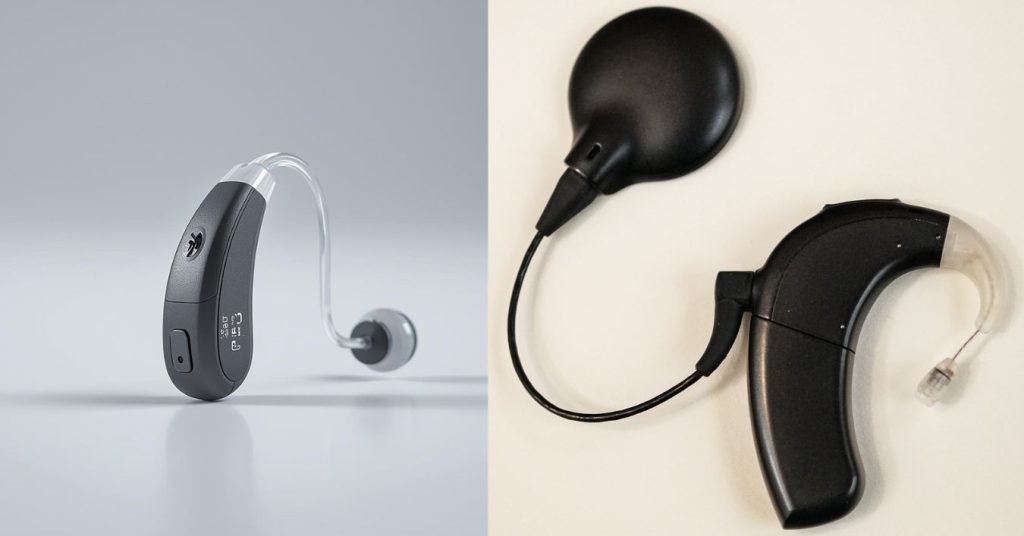
Hearing aids are the most common solution for individuals with mild to moderate hearing loss. These small, electronic devices amplify sound, making it easier to hear conversations, television, and environmental noises. Modern hearing aids come in a variety of styles, including behind-the-ear (BTE), in-the-ear (ITE), and completely-in-canal (CIC) models, each designed to suit different levels of hearing loss, comfort preferences, and cosmetic considerations.
At their core, hearing aids consist of a microphone, amplifier, and speaker. The microphone picks up sound, the amplifier increases the volume, and the speaker delivers the enhanced sound into the ear canal. Many modern devices also feature digital processing, which can reduce background noise, enhance speech clarity, and even connect wirelessly to smartphones and other audio devices. This technology allows users to adjust settings for different environments, such as restaurants, concerts, or quiet home settings, offering a more personalized hearing experience.
The benefits of hearing aids are numerous. They are non-surgical, generally quick to fit, and adjustable as hearing needs change. They can significantly improve communication and social interaction, reducing feelings of isolation and frustration. Additionally, they are more accessible and often less expensive than cochlear implants, with many insurance plans providing partial coverage.
However, hearing aids have limitations. They rely on the inner ear’s remaining function, so individuals with severe or profound sensorineural hearing loss may not experience sufficient improvement. They also require ongoing maintenance, including battery changes, regular cleaning, and occasional software updates or professional adjustments. Environmental factors, like excessive background noise, can still challenge even advanced devices, and some users may need time to adapt to amplified sounds or feedback.
Despite these limitations, hearing aids remain a highly effective first step for many adults managing hearing loss. They can enhance quality of life, improve safety, and support cognitive function by keeping the brain engaged with sound. For those whose hearing loss progresses beyond what hearing aids can address, cochlear implants may offer a more advanced solution.
Cochlear Implants Explained: Who They Help and How
Cochlear implants are advanced medical devices designed for individuals with severe to profound sensorineural hearing loss who do not benefit sufficiently from hearing aids. Unlike hearing aids, which amplify sound, cochlear implants bypass damaged hair cells in the inner ear and directly stimulate the auditory nerve, allowing the brain to perceive sound more clearly. This technology can dramatically improve the ability to understand speech, especially in noisy environments, and in many cases, restore a level of hearing that would be impossible with traditional hearing aids.
The cochlear implant system consists of two main components: an external processor and an internal implant. The external processor sits behind the ear, capturing sound and converting it into digital signals. These signals are then transmitted through the skin to the internal implant, which sends electrical impulses directly to the auditory nerve. Over time, with consistent use and auditory training, the brain learns to interpret these signals as meaningful sound, enabling improved communication and environmental awareness.
Ideal candidates for cochlear implants are typically adults who have severe hearing loss in both ears and receive limited benefit from hearing aids. Candidates undergo comprehensive evaluations, including hearing tests, imaging studies, and medical assessments, to ensure the procedure is appropriate. Age alone is not a barrier, and many adults over 50 successfully benefit from cochlear implants.
The advantages of cochlear implants include significantly enhanced speech perception, improved quality of life, and the ability to engage more fully in social activities. Users often report better performance in group conversations and environments with background noise compared to hearing aids. However, there are important considerations: the procedure requires surgery and carries typical surgical risks, rehabilitation is necessary to maximize hearing outcomes, and the devices can be costly. Insurance coverage and government assistance programs may offset some of these expenses, but financial planning is essential.
Cochlear implants are not a universal solution, and results can vary depending on factors like duration of deafness, remaining auditory nerve function, and commitment to post-surgical therapy. For many adults facing severe hearing loss, though, cochlear implants provide a transformative option, offering the possibility of reconnecting with the sounds and voices of daily life.
Comparing Costs, Maintenance, and Lifestyle Considerations
When deciding between hearing aids and cochlear implants, cost, maintenance, and lifestyle factors play a significant role. Understanding these differences can help individuals make an informed choice that fits both their hearing needs and daily routines.
Costs vary widely between the two options. Hearing aids generally range from $1,000 to $6,000 per device, depending on the technology, features, and brand. Many insurance plans cover part of the cost, though coverage levels differ, and some individuals may rely on flexible spending accounts or health savings accounts. Cochlear implants, by contrast, involve a higher upfront cost, often ranging from $30,000 to $50,000 for the device, surgery, and post-operative rehabilitation. While Medicare and some private insurance plans may cover a portion of cochlear implant expenses, out-of-pocket costs can still be substantial, making financial planning essential.
Maintenance and care also differ between the two. Hearing aids require regular battery changes, cleaning, and occasional professional adjustments. They are generally low-risk and non-invasive, making them a convenient choice for many adults. Cochlear implants, however, involve both the care of the external processor and ongoing rehabilitation. The external device requires charging or battery changes, and the implant may need programming adjustments over time. Additionally, users often attend auditory therapy sessions to maximize the implant’s effectiveness, which adds time and effort commitments.
Lifestyle considerations include daily activities, social engagement, and personal preferences. Hearing aids are small, discreet, and can be easily removed, making them suitable for individuals who want a low-maintenance, flexible solution. They are effective for mild to moderate hearing loss but may struggle in extremely noisy environments. Cochlear implants, while more invasive and requiring surgery, provide superior hearing outcomes for severe hearing loss, especially in challenging listening situations. They allow users to participate more fully in social activities, enjoy music, and improve overall communication in complex auditory environments.
It’s also important to consider long-term adaptability. Hearing aids can be upgraded or replaced as technology evolves, while cochlear implants may require hardware updates or replacement after several years. Both options require commitment and realistic expectations: hearing aids improve but do not restore hearing to “normal,” and cochlear implants demand rehabilitation and patience for optimal results.
Ultimately, weighing costs, maintenance, and lifestyle factors alongside hearing severity and personal goals is essential. Consulting with an audiologist or ENT specialist can provide individualized recommendations and help balance these considerations to achieve the best hearing outcome.
Making the Right Choice: Factors to Consider
Choosing between hearing aids and cochlear implants is a highly personal decision that depends on multiple factors, including the degree of hearing loss, lifestyle needs, medical considerations, and personal preferences. Understanding these factors can help individuals make a choice that optimizes both hearing ability and overall quality of life.
Degree of hearing loss is often the most critical factor. For mild to moderate hearing loss, hearing aids are typically sufficient to amplify sound and improve communication. For severe to profound hearing loss, cochlear implants may be the only effective option to restore meaningful hearing. An audiologist can perform detailed assessments to determine which solution will provide the best auditory outcome.
Medical considerations are also important. Cochlear implants require surgery, so overall health, ear anatomy, and the potential for surgical complications must be evaluated. Hearing aids, by contrast, are non-invasive and suitable for most individuals without surgical restrictions. Age alone is not a limitation for either option, though overall health and cognitive function may influence rehabilitation outcomes, especially for cochlear implant users.
Lifestyle and daily activities influence device selection. Active individuals who frequently socialize or attend noisy environments may benefit more from cochlear implants if hearing aids are insufficient. For those who prefer low-maintenance devices that can be easily removed and adjusted, hearing aids may be a better fit. Considerations like travel, work environments, and social gatherings also play a role in choosing the device that integrates seamlessly into daily life.
Financial factors cannot be overlooked. Hearing aids are generally less expensive upfront but may require ongoing maintenance and upgrades. Cochlear implants involve a higher initial investment and post-surgical rehabilitation costs, though they may provide a more permanent solution for severe hearing loss. Exploring insurance coverage, government assistance, and flexible payment plans is crucial for both options.
Support and rehabilitation are essential for success. Cochlear implants require auditory training and regular follow-ups to maximize hearing outcomes, while hearing aids may require periodic adjustments to match changing hearing needs. Family and caregiver involvement can make the adaptation process smoother, especially for older adults adjusting to new hearing technology.
Ultimately, the right choice balances hearing needs, medical suitability, lifestyle preferences, and financial considerations. Consulting with an audiologist or ENT specialist ensures a personalized approach, helping individuals regain confidence in communication and reconnect with the sounds of everyday life.
Conclusion
Hearing loss can profoundly impact daily life, relationships, and overall well-being, making timely intervention crucial. Both hearing aids and cochlear implants offer effective solutions, but they serve different needs and levels of hearing loss. Hearing aids are ideal for mild to moderate hearing challenges, providing amplification, convenience, and a non-invasive option to improve communication. Cochlear implants, on the other hand, are designed for severe to profound hearing loss, offering a surgical solution that directly stimulates the auditory nerve and can restore a level of hearing unattainable with traditional aids.
When deciding between these options, it’s important to consider the degree of hearing loss, medical factors, lifestyle needs, costs, and the level of support required for successful adaptation. Consultation with audiologists and ENT specialists ensures that decisions are tailored to individual circumstances, maximizing the chances of improved hearing and quality of life.
Ultimately, both hearing aids and cochlear implants can transform the experience of sound, helping individuals reconnect with loved ones, engage fully in social activities, and maintain cognitive and emotional well-being. Taking proactive steps to address hearing loss empowers adults to live more confidently and enjoy a richer, more connected life.
FAQ
What is the main difference between hearing aids and cochlear implants?
Hearing aids amplify sound and rely on the inner ear’s remaining function, making them suitable for mild to moderate hearing loss. Cochlear implants bypass damaged parts of the inner ear and directly stimulate the auditory nerve, offering a solution for severe to profound hearing loss.
Who is a candidate for cochlear implants?
Ideal candidates are adults with severe to profound hearing loss who receive limited benefit from hearing aids. Candidates undergo hearing assessments, imaging, and medical evaluations to ensure they can safely undergo surgery and benefit from the device. Age alone is not a limiting factor.
How much do hearing aids and cochlear implants cost?
Hearing aids typically range from $1,000 to $6,000 per device, depending on technology and features. Cochlear implants, including surgery and rehabilitation, can range from $30,000 to $50,000. Insurance coverage varies, so checking plans and assistance programs is important.
What is the recovery and adaptation process for cochlear implants?
After surgery, users must attend regular follow-up appointments for device programming and auditory rehabilitation. The brain gradually learns to interpret electrical signals as sound, a process that can take weeks to months. Family support and consistent practice significantly enhance outcomes.
Can hearing aids or cochlear implants restore normal hearing?
Neither device fully restores normal hearing. Hearing aids improve sound amplification, while cochlear implants provide the ability to perceive speech and environmental sounds more clearly. Both can significantly enhance communication and quality of life when used appropriately.
This article is for informational purposes only and is not a substitute for professional medical advice, diagnosis, or treatment. If you are concerned about your hearing or ear health, please consult a qualified healthcare provider.