
In recent years, online hearing tests have become increasingly popular, offering a convenient way to check your hearing from the comfort of your home. Whether it’s due to busy schedules, mobility challenges, or simply curiosity, many adults are turning to digital tools to gain a quick sense of their hearing health. But while these tests are accessible and easy to use, a common question arises: how accurate are they?
Understanding the reliability of online hearing tests is essential. Unlike traditional in-person evaluations conducted by audiologists in a controlled environment, online tests are influenced by multiple factors—from the type of device and headphones you use to background noise and even how well you follow instructions. These variables can affect the results and, in some cases, may give an incomplete picture of your hearing ability.
This article will explore the mechanics behind online hearing tests, examine the factors that influence their accuracy, and compare them to professional audiology exams. We’ll also highlight the advantages and limitations of digital testing and offer practical tips to help you get the most reliable results. By the end, you’ll have a clear understanding of what online hearing tests can—and cannot—tell you, empowering you to make informed decisions about your hearing health.
How Online Hearing Tests Work
Online hearing tests are designed to give users a convenient way to evaluate their hearing without needing to visit a clinic. While these tests vary in format and complexity, most aim to replicate the core principles of a traditional audiology assessment in a simplified, digital form. Understanding how these tests work can help you interpret your results more accurately.
One of the most common types of online hearing assessments is pure-tone audiometry, which measures your ability to hear specific frequencies at varying volumes. In a typical online version, the test plays a series of tones through headphones, asking you to indicate when you hear a sound. The test often spans frequencies that are important for understanding speech, generally from 250 Hz to 8,000 Hz. While the concept mirrors what an audiologist does, online tests lack the calibrated equipment and soundproof environment of a professional clinic, which can affect the precision of the results.
Another popular method is the speech-in-noise test. These tests assess your ability to understand speech in the presence of background noise—a skill that is often more critical in daily life than detecting pure tones. Online versions typically play recordings of words or sentences mixed with background sounds, and the user is asked to identify what they hear. This type of test can be especially useful for detecting early signs of hearing difficulty in noisy environments, but results can vary widely depending on your device and surroundings.
Some online hearing tests are self-administered questionnaires that ask about symptoms, lifestyle, and perceived hearing difficulties. While these do not provide objective measurements, they can help identify patterns or risk factors that warrant further evaluation.
It’s also worth noting that many online platforms combine different approaches—pure-tone tests, speech-in-noise assessments, and questionnaires—to provide a more comprehensive overview. However, despite these efforts, online tests are screening tools rather than diagnostic instruments. They can indicate potential hearing loss and encourage timely follow-up with a professional, but they cannot replace a full audiological evaluation conducted with calibrated equipment in a controlled setting.
In summary, online hearing tests work by simulating aspects of clinical assessments, offering a practical first step for users concerned about their hearing. Understanding their methodology is crucial to interpreting results realistically and knowing when professional guidance is necessary.
Factors Affecting Accuracy
While online hearing tests offer convenience, several factors can significantly influence their accuracy. Understanding these variables helps you interpret your results correctly and avoid false assumptions about your hearing health.
1. Device Quality
The type of device and headphones you use can make a major difference. Online tests rely on digital audio output, which varies between smartphones, tablets, laptops, and desktop computers. Inexpensive or poorly calibrated headphones may distort sound frequencies, resulting in either underestimation or overestimation of hearing ability. Professional audiologists use calibrated equipment to ensure precise sound levels, something online tests cannot guarantee.
2. Background Noise
Unlike clinic settings, your home environment is not soundproof. Even low levels of background noise—such as a running fan, a TV in another room, or traffic outside—can mask tones or speech cues in the test, leading to inaccurate results. Some online tests try to compensate for this by providing noise level instructions, but uncontrolled environments still introduce variability.
3. User Technique and Compliance
How you take the test matters. If you don’t wear headphones properly, adjust volume incorrectly, or fail to follow the instructions precisely, the results can be skewed. Online tests often rely on self-reporting, which can be affected by distraction, misunderstanding, or even personal bias (for example, pressing the “heard it” button too early).
4. Test Design
Not all online tests are created equal. Some only measure a limited range of frequencies, while others may focus on speech-in-noise abilities. Simpler tests, such as online questionnaires or tone checks, provide general guidance but cannot detect subtle hearing loss or conditions like high-frequency hearing loss, tinnitus, or auditory processing disorders. The algorithms used by different platforms also vary, affecting sensitivity and specificity.
5. Individual Health Factors
Your physical condition at the time of testing can influence results. Earwax buildup, colds, sinus infections, or recent exposure to loud noise can temporarily affect hearing. Online tests do not typically account for these variables, whereas professional audiologists can control for them during a clinical evaluation.
In short, online hearing tests are affected by technical, environmental, and personal factors. While they can provide useful preliminary insights, these influences mean that results should be interpreted cautiously. For the most accurate understanding of your hearing, online tests should be seen as a first step rather than a definitive diagnosis.
Comparing Online Tests to Professional Audiology Exams
When considering online hearing tests, it’s important to understand how they stack up against professional audiology evaluations. While online tools are convenient, they cannot replicate the thoroughness, precision, and diagnostic capabilities of a clinical assessment conducted by a licensed audiologist.
Accuracy and Calibration
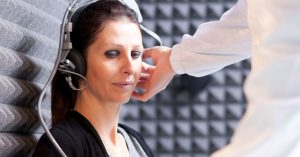
Professional audiologists use calibrated equipment in soundproof environments to measure hearing across a full range of frequencies and decibels. This ensures that the tones you hear are precisely controlled, allowing for an accurate assessment of both the degree and type of hearing loss. Online tests, by contrast, depend on consumer-grade devices and headphones, which can introduce variability. Even high-quality headphones may not deliver standardized output, meaning results can be inconsistent from one test to another.
Scope of Assessment
Clinical exams go beyond detecting basic hearing thresholds. Audiologists evaluate speech recognition, middle-ear function, auditory processing, and other factors that online tests cannot reliably measure. Conditions such as conductive hearing loss, sensorineural damage, or early-stage age-related hearing loss may go undetected in an online screening. This is especially important for adults over 50, who may experience subtle declines in high-frequency hearing that affect speech comprehension.
Professional Interpretation
Another key difference is the interpretation of results. Online tests provide automated feedback, often in the form of “normal,” “mild loss,” or “consult an audiologist.” These labels can be helpful for general awareness but may oversimplify complex hearing patterns. In a clinical setting, audiologists analyze detailed audiograms, discuss results in context with medical history, and recommend personalized interventions, such as hearing aids, assistive devices, or medical referrals.
Early Detection vs. Diagnosis
Online tests can serve as early screening tools, alerting users to potential hearing issues. They are particularly useful for people who might otherwise delay testing due to mobility issues, distance from a clinic, or mild concerns. However, they are not diagnostic tools. A concerning result on an online test should prompt a professional evaluation, whereas normal online results do not guarantee perfect hearing.
Research Insights
Studies have shown that well-designed online hearing tests can correlate moderately well with clinical audiometry, particularly for detecting moderate to severe hearing loss. However, their reliability decreases for mild or frequency-specific losses, underscoring the importance of using them as preliminary tools rather than definitive assessments.
In conclusion, while online hearing tests are useful for initial screening, they cannot replace a professional audiology exam. They are most effective when used as a first step to identify potential issues and encourage timely follow-up with a qualified healthcare provider.
Pros and Cons of Online Hearing Tests
Online hearing tests offer a mix of advantages and limitations, and understanding both can help you decide when and how to use them effectively.
Pros
1. Convenience and Accessibility
The most obvious benefit of online hearing tests is convenience. You can take a test from home, at any time, without needing to schedule an appointment or travel to a clinic. This is particularly helpful for adults with mobility challenges, caregivers, or those living in remote areas.
2. Early Detection and Awareness
Online tests can alert users to potential hearing issues before they become more severe. Early detection allows individuals to seek professional care sooner, which can prevent further hearing deterioration and improve quality of life.
3. Cost-Effective
Many online hearing assessments are free or low-cost, making them an accessible first step for those who may be hesitant to invest in a professional evaluation immediately. They can provide reassurance or highlight the need for follow-up without financial pressure.
4. Comfort and Privacy
Some people feel anxious about visiting a clinic for hearing testing. Online tests can be taken privately, at your own pace, which may reduce stress and make the experience more comfortable.
Cons
1. Limited Accuracy
As discussed in previous sections, online hearing tests are affected by device quality, background noise, and user technique. They cannot provide the same level of precision as a clinic-based audiogram, especially for subtle or high-frequency hearing loss.
2. Cannot Diagnose Medical Conditions
Online tests can indicate potential hearing loss, but they cannot diagnose the cause. Conditions such as ear infections, wax buildup, or neurological issues require professional evaluation. Relying solely on an online test may delay necessary medical care.
3. Variable Test Quality
Not all online hearing tests are created equal. Some platforms use outdated methods, poor sound calibration, or limited frequency ranges, which can lead to misleading results. Choosing a reputable test is essential for more reliable outcomes.
4. Over- or Underestimation of Hearing Loss
Users may misinterpret results due to oversimplified scoring, automated labels, or misunderstanding the test instructions. This can either cause unnecessary worry or give false reassurance about hearing ability.
5. Lack of Personalized Guidance
Unlike a professional evaluation, online tests do not offer tailored advice. Audiologists provide individualized recommendations based on your results, lifestyle, and medical history—something that automated online platforms cannot replicate.
In summary, online hearing tests are a practical first step for raising awareness about hearing health, but they come with significant limitations. They are best used as a screening tool, prompting users to seek professional follow-up for a complete and accurate assessment.
Tips for Getting the Most Accurate Results Online
If you choose to take an online hearing test, there are several steps you can take to improve accuracy and get a more reliable assessment. While these tips don’t replace a professional evaluation, they can help ensure that your results are as meaningful as possible.
1. Use Quality Headphones or Earbuds
The type and quality of your audio equipment greatly affect test results. Over-ear or in-ear headphones that are well-calibrated provide clearer sound than laptop speakers or low-quality earbuds. Avoid using wireless devices with latency issues or significant audio distortion, as these can interfere with tone and speech recognition.
2. Find a Quiet Environment
Background noise is one of the biggest factors that can skew online test results. Choose a quiet room, turn off fans, TVs, and phones, and ask others in your household to minimize interruptions. Even subtle ambient noise can make it harder to detect certain frequencies.
3. Follow Instructions Carefully
Online hearing tests often rely on precise user input, such as pressing a button when you hear a tone. Read and follow all instructions carefully. Adjust the volume to a comfortable level recommended by the test platform, and make sure your headphones fit snugly to avoid audio leakage.
4. Take the Test at the Right Time
Your hearing can fluctuate throughout the day. Avoid testing immediately after exposure to loud environments or when experiencing congestion, ear infections, or fatigue. Testing under normal, relaxed conditions provides a more accurate representation of your everyday hearing.
5. Repeat the Test for Consistency
Consider taking the test more than once to see if results are consistent. Repeated tests under controlled conditions can help identify anomalies caused by distractions, device issues, or temporary hearing changes.
6. Use Reputable Platforms
Choose online hearing tests from trusted sources, such as audiology clinics, research institutions, or well-reviewed health websites. Avoid unverified apps or websites that lack transparency about testing methods, calibration, or scientific validation.
7. Treat Results as a Screening Tool
Even when following all best practices, remember that online hearing tests are screening tools, not diagnostic instruments. Use results to inform decisions about scheduling a professional evaluation rather than relying solely on them to judge your hearing health.
By following these tips, you can maximize the reliability of online hearing tests and use the information to make informed decisions about your hearing care. They are most effective when used in combination with professional guidance, helping you take proactive steps toward maintaining or improving your hearing health.
Conclusion
Online hearing tests have become an increasingly popular way for people to assess their hearing from the comfort of home. They offer convenience, accessibility, and an opportunity for early detection, particularly for adults over 50 or those living in remote areas. These tests can help identify potential hearing concerns and encourage timely follow-up with a professional audiologist.
However, it’s important to remember their limitations. Factors such as device quality, background noise, user technique, and test design can all influence accuracy. While online tests can indicate whether further evaluation is needed, they cannot replace a comprehensive in-person assessment. Subtle hearing loss, high-frequency deficits, and certain medical conditions require professional evaluation to diagnose accurately and guide treatment.
Ultimately, online hearing tests are best viewed as a first step in hearing health management. They are useful for raising awareness and prompting action, but the most reliable results come from a licensed audiologist using calibrated equipment in a controlled environment. By combining online screening with professional care, you can take proactive steps to protect your hearing, improve communication, and maintain quality of life.
FAQ
How reliable are online hearing tests compared to professional exams?
Online hearing tests can provide a general indication of hearing ability, especially for moderate to severe hearing loss. However, they are less reliable for detecting subtle or frequency-specific deficits. Professional audiology exams use calibrated equipment in controlled environments, making them far more accurate and capable of diagnosing underlying conditions.
Can I trust the results of a free online hearing test?
Free online hearing tests can be useful for initial screening, but results should be interpreted with caution. Factors such as device quality, background noise, and user technique can affect accuracy. Use reputable platforms and treat the results as a prompt to seek professional evaluation rather than a definitive diagnosis.
What should I do if an online test shows potential hearing loss?
If your online test indicates possible hearing loss, schedule a comprehensive evaluation with a licensed audiologist. Early intervention can prevent further hearing deterioration and improve communication. Professional assessment will provide a detailed audiogram, identify the type and degree of hearing loss, and recommend appropriate treatment options.
Are online hearing tests suitable for older adults?
Yes, online tests are suitable for adults of all ages, including those over 50. They offer a convenient way to monitor hearing health, especially for individuals with mobility issues or limited access to clinics. However, older adults should be aware that results may vary depending on device use, hearing aid status, and environmental factors.
Can online hearing tests detect all types of hearing loss?
No, online tests are limited in scope. They can detect general hearing difficulties and problems with speech-in-noise recognition, but they may miss conditions like high-frequency hearing loss, auditory processing disorders, or medically significant issues. Comprehensive in-person testing is necessary for a complete assessment.
This article is for informational purposes only and is not a substitute for professional medical advice, diagnosis, or treatment. If you are concerned about your hearing or ear health, please consult a qualified healthcare provider.