Speech delay in children is one of the most common concerns raised by parents, grandparents, and caregivers. When a child is slower to start talking or struggles to form words and sentences, it can lead to worry, frustration, and a lot of unanswered questions. While every child develops at their own pace, ongoing or noticeable delays in speech should never be ignored. One possible cause that is often overlooked is hearing loss.
Children learn to speak by listening to the sounds around them, copying words, and gradually understanding how language works. If a child cannot hear sounds clearly or consistently, their ability to learn speech can be affected from a very early age. Hearing loss does not always look obvious, and many children with hearing difficulties appear to respond well in familiar environments. This can make it easy for parents to assume their child is simply a “late talker” rather than considering a hearing-related issue.
Speech delay can have a significant impact beyond communication. It may affect a child’s confidence, behaviour, social development, and readiness for school. Children who struggle to express themselves may become withdrawn or frustrated, particularly when they cannot make themselves understood. Identifying the underlying cause early can make a substantial difference to long-term outcomes.
This article explores the link between speech delay in children and hearing loss, helping caregivers understand how hearing difficulties can affect language development. It will explain the signs to look out for, the types of hearing loss that may be involved, and the steps families can take to seek assessment and support. With early diagnosis and the right intervention, many children go on to develop strong communication skills and thrive.
What Is Speech Delay in Children?
Speech delay in children refers to a situation where a child is not developing speech and language skills at the expected rate for their age. While every child develops differently, there are general milestones that help parents and professionals understand what is typical. When these milestones are significantly missed, it may indicate a delay that needs further investigation.
Speech relates to how a child produces sounds and words, including pronunciation, clarity, and fluency. Language, on the other hand, involves understanding and using words to communicate meaning, such as following instructions, building vocabulary, and forming sentences. Some children may have a speech delay, a language delay, or a combination of both. Understanding this difference is important because hearing loss can affect both areas.
Early signs of speech delay may include limited babbling in infancy, few or no words by around 18 months, difficulty combining words by age two, or speech that is hard to understand compared to peers. Older children may struggle with sentence structure, grammar, or expressing their thoughts clearly. These signs can sometimes be subtle, especially if a child uses gestures or routines to compensate for communication difficulties.
It is also important to recognise that speech delay does not always mean a long-term problem. Some children do catch up naturally, especially with extra support and stimulation. However, waiting too long to “see how things go” can delay diagnosis of underlying issues, including hearing loss. Even mild or fluctuating hearing problems can interfere with how a child hears speech sounds during critical learning periods.
Parents may be reassured by comments such as “boys talk later than girls” or “they’ll grow out of it,” but these assumptions can sometimes prevent timely assessment. Speech delay should be viewed as a signal to look more closely at a child’s development, not a diagnosis on its own. Identifying the cause early gives children the best chance to receive appropriate support and develop strong communication skills.
How Hearing Loss Affects Speech and Language Development
Hearing plays a central role in how children learn to speak and understand language. From birth, babies begin absorbing sounds from their environment, listening to voices, and gradually learning how speech works. When hearing is reduced or unclear, this natural learning process can be disrupted, often without obvious signs in the early stages.
Children learn speech by hearing words repeatedly and accurately. They listen to the rhythm, tone, and pronunciation of sounds, then practise copying them. If a child cannot hear certain sounds clearly, they may miss important parts of words or sentences. Over time, this can affect their ability to pronounce words correctly, build vocabulary, and understand how language is structured.
Even mild hearing loss can have an impact. Sounds such as “s,” “f,” “t,” and “k” are quieter and higher in pitch, making them harder to hear. These sounds are essential for clear speech and grammar, including plural endings and verb tenses. A child who consistently misses these sounds may develop unclear speech or use shorter, simpler sentences.
Hearing loss can also affect a child’s understanding of spoken language. They may struggle to follow instructions, especially in noisy environments like nurseries or classrooms. This can sometimes be mistaken for inattention or behavioural issues, when the real problem is that the child cannot hear clearly enough to process what is being said.
Importantly, hearing loss in children is not always permanent or obvious. Some children experience fluctuating hearing due to ear infections or fluid in the middle ear. This inconsistency can be particularly challenging for speech development, as the child does not receive a stable and reliable sound signal.
Types of Hearing Loss That Can Cause Speech Delay
Hearing loss in children can take several different forms, and each type can affect speech and language development in different ways. Understanding these types helps parents and caregivers recognise why a hearing check is such an important step when speech delay is suspected.
Conductive hearing loss is common in young children and occurs when sound cannot pass efficiently through the outer or middle ear. It is often caused by ear infections, fluid behind the eardrum (glue ear), or earwax. Although usually temporary, it can still affect speech if it persists during key developmental periods.
Glue ear is especially common in early childhood and may fluctuate over time. A child’s hearing may be clear one week and muffled the next, making it harder to learn consistent speech sounds and language patterns.
Sensorineural hearing loss affects the inner ear or auditory nerve and is usually permanent. It may be present from birth or develop later due to illness, infection, or genetic factors. Without early intervention, this type of hearing loss can significantly delay speech and language development.
Mixed hearing loss is a combination of conductive and sensorineural hearing loss, while unilateral hearing loss affects only one ear. Even when one ear hears normally, speech clarity and listening skills can still be affected, particularly in noisy environments.
Signs That Hearing Loss May Be Behind a Speech Delay
Hearing loss is not always easy to spot. Children may appear attentive and responsive, especially in familiar surroundings. However, certain signs may suggest hearing difficulties.
These include delayed speech, unclear pronunciation, limited vocabulary, or reliance on gestures instead of words. Children may not respond consistently to their name, struggle to follow instructions, or frequently ask for repetition. Behavioural signs such as frustration, withdrawal, or tantrums may reflect communication difficulties rather than behavioural problems.
Difficulty hearing in noisy environments, watching others before responding, or mishearing similar-sounding words can also be indicators. Importantly, passing a newborn hearing screen does not rule out hearing loss later in childhood.
If concerns exist, a hearing assessment is an essential step toward understanding a child’s needs.
Diagnosis, Treatment, and Support Options
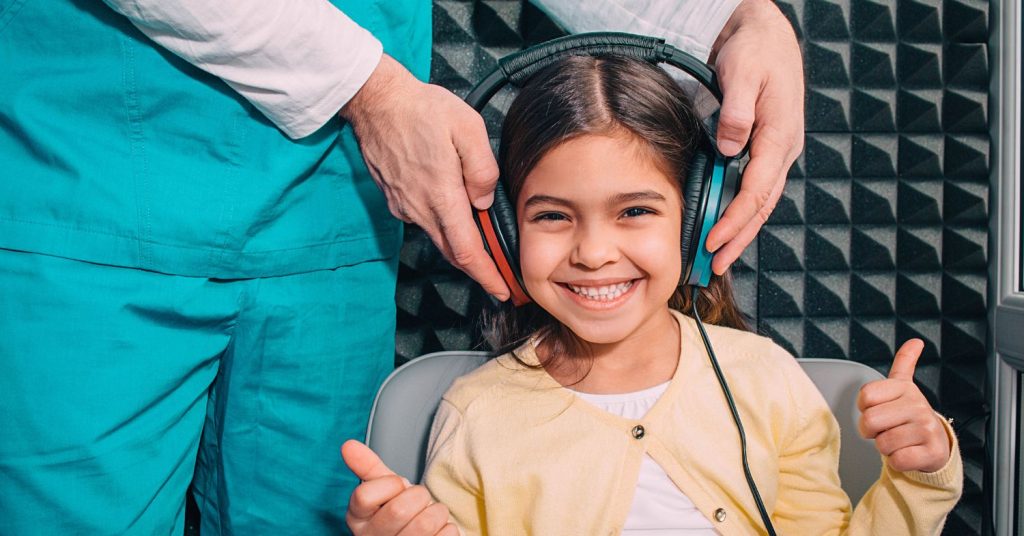
Hearing tests are a key part of assessing speech delay. These tests are child-friendly and tailored to a child’s age and development. They can identify the type and severity of hearing loss and guide appropriate treatment.
Temporary hearing loss may be monitored or treated medically, while permanent hearing loss may be supported with hearing aids or other listening devices. Speech and language therapy often works alongside hearing care to support communication development.
Early intervention services can have a powerful impact, particularly when support is provided during the early years when the brain is most adaptable.
Supporting a Child With Speech Delay at Home
Parents and caregivers play a vital role in supporting speech development. Reducing background noise, speaking clearly, getting down to the child’s eye level, and using visual cues can all help.
Talking throughout the day, expanding on what a child says, reading together, and encouraging communication without pressure are highly effective strategies. Consistent use of hearing aids or listening devices, when prescribed, is also essential.
Small, everyday interactions can make a big difference over time.
Conclusion
Speech delay in children can be concerning, but understanding the possible causes is empowering. Hearing loss is a common and often hidden factor that can significantly affect speech and language development.
Early hearing checks, combined with appropriate intervention and home support, give children the best chance to develop strong communication skills. Trusting instincts, seeking advice early, and advocating for assessment can make a lasting difference.
FAQ
Can hearing loss really cause speech delay in children?
Yes. Children learn speech by listening, and hearing loss can disrupt this process, even when it is mild or temporary.
Should my child have a hearing test if they are slow to talk?
Yes. A hearing test is recommended for any child with speech delay, regardless of newborn screening results.
Can glue ear affect speech development?
Yes. Fluctuating or ongoing glue ear can interfere with how children hear speech sounds, affecting clarity and language development.
Will my child need hearing aids if hearing loss is found?
Not always. Treatment depends on the type and severity of hearing loss. An audiologist will advise on the most appropriate support.
Can children with hearing-related speech delay catch up?
Many children make excellent progress with early identification, appropriate hearing care, speech therapy, and home support.
This article is for informational purposes only and is not a substitute for professional medical advice, diagnosis, or treatment. If you are concerned about your hearing or ear health, please consult a qualified healthcare provider.