
Hearing is something many of us take for granted, until it begins to fade. In the workplace, especially in noisy environments, hearing loss can develop so gradually that people may not notice a problem until the damage is already permanent. This is why workplace hearing tests and rules play such an important role in protecting employees’ long-term hearing health. They are not simply a box-ticking exercise for employers, but a vital safeguard designed to prevent avoidable hearing damage and support a healthier working life.
Noise-induced hearing loss is one of the most common occupational health issues in the UK and many other countries. It can be caused by prolonged exposure to loud machinery, tools, or equipment, as well as sudden bursts of extremely loud noise. What makes this type of hearing loss particularly challenging is that it is usually painless and develops over time. By the time symptoms such as difficulty following conversations, needing to turn up the television, or struggling to hear in background noise become obvious, the damage may already be irreversible.
Workplace hearing tests are a key part of identifying problems early. These tests, often referred to as audiometric testing, are designed to measure how well a person can hear different pitches and volumes of sound. When carried out regularly, they can reveal small changes in hearing before they start to affect everyday communication. This early warning allows employers to review noise controls and enables employees to take steps to protect their hearing before further damage occurs.
There are also clear legal rules surrounding noise at work and hearing tests. In the UK, employers have a duty to assess noise risks and take action when exposure reaches certain levels. This includes providing hearing protection, offering hearing tests, and ensuring workers understand the risks associated with noise exposure. Employees, in turn, have responsibilities to follow safety guidance and use protective equipment correctly. Understanding these workplace hearing tests and rules helps both sides work together to prevent hearing loss rather than reacting to it after the fact.
Understanding Noise-Induced Hearing Loss at Work
Noise-induced hearing loss is one of the most common yet preventable health conditions linked to the workplace. It occurs when the delicate structures inside the inner ear are damaged by exposure to loud sounds over time or by a single, extremely loud noise. Once this damage happens, it cannot be reversed, which is why understanding how it develops and how workplace noise contributes is essential for both employers and employees.
Inside the inner ear are thousands of tiny hair cells that convert sound vibrations into signals the brain can understand. Prolonged exposure to loud noise causes these hair cells to become overstressed and eventually die. Unlike other cells in the body, they do not regenerate. This means that repeated exposure to noise levels that may not feel painfully loud can still lead to permanent hearing loss.
Certain industries carry a higher risk of noise-induced hearing loss. Manufacturing, construction, agriculture, aviation, entertainment, and transportation are among the most affected sectors. However, noisy environments are not limited to traditional industrial settings. Open-plan offices, call centres using headsets, and healthcare settings with alarms and equipment can also contribute to hearing strain.
Early signs of noise-induced hearing loss are often subtle. Ringing in the ears, temporary muffled hearing, or difficulty following conversations may be dismissed as normal. Over time, these changes can become permanent. Regular workplace hearing tests are essential for identifying problems early and reducing long-term impact on hearing and quality of life.
What Are Workplace Hearing Tests and Why Are They Important?
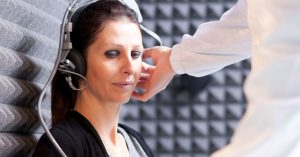
Workplace hearing tests, often called audiometric tests, measure how well a person hears sounds at different pitches and volumes. They are simple, painless, and provide a clear snapshot of hearing health at a specific point in time.
During the test, the employee wears headphones and responds to a range of tones. The results are plotted on an audiogram, which allows professionals to spot even small changes in hearing. When tests are repeated regularly, patterns can be identified that may suggest early noise-related damage.
The value of workplace hearing tests lies in early detection. Noise-induced hearing loss develops gradually, and many people adapt without realising their hearing is changing. Identifying changes early allows employers to review noise controls and employees to improve hearing protection habits.
Hearing tests also support legal compliance and employee wellbeing. Hearing difficulties can affect communication, confidence, and productivity. For older employees or those exposed to noise over many years, regular hearing tests are an important safeguard.
Legal Rules and Regulations Around Workplace Hearing Tests
In the UK, workplace hearing tests are governed by the Control of Noise at Work Regulations 2005. These regulations set out specific noise exposure levels known as action values.
At 80 decibels, employers must assess risks, provide information, and make hearing protection available. At 85 decibels, stronger action is required, including enforced hearing protection and health surveillance such as hearing tests. An exposure limit of 87 decibels must never be exceeded when hearing protection is taken into account.
Hearing tests are typically provided when exposure reaches the upper action value or when there is a known risk to hearing. Employers must also act on the results, reviewing risk assessments and improving controls where necessary. Employees are expected to cooperate and follow safety guidance.
Employer Responsibilities Under Workplace Hearing Test Rules
Employers must carry out noise risk assessments, reduce noise at source where possible, and provide suitable hearing protection. Hearing tests must be offered to employees exposed to harmful noise, usually starting with a baseline test followed by regular monitoring.
Employers are also responsible for keeping records, maintaining confidentiality, and acting on test results. Training employees about noise risks and correct use of hearing protection is essential for creating a strong safety culture.
Employee Rights and Responsibilities
Employees have the right to a safe working environment, access to hearing protection, and workplace hearing tests when required. They also have the right to receive and understand their test results.
In return, employees must attend hearing tests, use hearing protection correctly, and report concerns about noise or hearing changes. Taking an active role helps protect not only individual hearing but also the wider workforce.
What Happens If a Workplace Hearing Test Shows Hearing Loss?
If hearing loss is detected, results are usually confirmed with repeat testing. Employers should then review noise controls and hearing protection measures. Employees may be referred for further assessment and supported with workplace adjustments if needed.
Early detection does not automatically threaten employment. Instead, it allows action to be taken to prevent further damage and support ongoing work safely.
Conclusion
Workplace hearing tests and rules are designed to prevent permanent hearing damage and support long-term wellbeing. Employers must assess risks, provide protection, and monitor hearing, while employees must engage with testing and follow safety guidance.
When both sides work together, hearing tests become a positive and protective measure rather than a burden. Protecting hearing at work helps preserve communication, independence, and quality of life for years to come.
FAQ
Are workplace hearing tests mandatory for all employees?
No. They are required when noise exposure reaches legal thresholds and there is a risk to hearing.
How often should workplace hearing tests be carried out?
Usually a baseline test followed by tests every one to three years, depending on risk.
Can an employee refuse a workplace hearing test?
They can, but refusal may conflict with health and safety responsibilities.
What happens if hearing loss is work-related?
Employers must review controls and provide support. The focus is prevention, not blame.
Do workplace hearing tests replace NHS hearing checks?
No. They monitor workplace noise exposure and do not replace medical hearing assessments.
This article is for informational purposes only and is not a substitute for professional medical advice, diagnosis, or treatment. If you are concerned about your hearing or ear health, please consult a qualified healthcare provider.